

- Email info@ChamundaSwamiJi.com
- Call +1-516-933-7590
-
 Email
info@ChamundaSwamiJi.com
Email
info@ChamundaSwamiJi.com
-
 Call
+1-516-933-7590
Call
+1-516-933-7590


Book an Appointment
Informative
Guru Mahima: Diksha, Shaktipaat (Part Two)
Guru Diksha and Shaktipaat: In the previous article, we honored the divine glory of the Guru—Sadguru Tattva. Today, we delve into two of the most sacred aspects of the Guru-disciple path: Diksha or spiritual initiation, and Shaktipaat or divine energy transmission. These are not merely spiritual formalities—they are keys that unlock the karmic vaults of the soul across lifetimes.
Why Diksha is the Gateway to Inner Realization
Until a seeker receives Diksha from a realized Guru, spiritual progress remains incomplete. According to the Tantras, uninitiated mantra-sadhana is like attempting to drive a chariot without harnessing the horses. Such mantras are often considered śāpa-yukta, meaning cursed, or baddha, meaning locked.
गुरुमुखात् लभ्यते तदा स सिद्धिदः
Mantraḥ gurumukhāt labhyate tadā sa siddhidaḥ
The mantra, when received from the Guru’s mouth, becomes capable of granting spiritual accomplishment.
The Guru purifies the vibration of the mantra through vāg-yoga (yogic speech) and infuses it with divya shakti (divine energy). Without this, impure pronunciation or incorrect mantra use can disturb one’s inner system. If mantra energy rises too rapidly through the Sushumna Nadi without proper grounding, it can imbalance the Manomaya Kosha or mental sheath. Many seekers, unable to handle this awakening, experience instability. A true Guru channels and regulates this force, lifting the Kundalini Shakti safely toward the Sahasrara.
Guru Diksha: The Alchemy of Karma
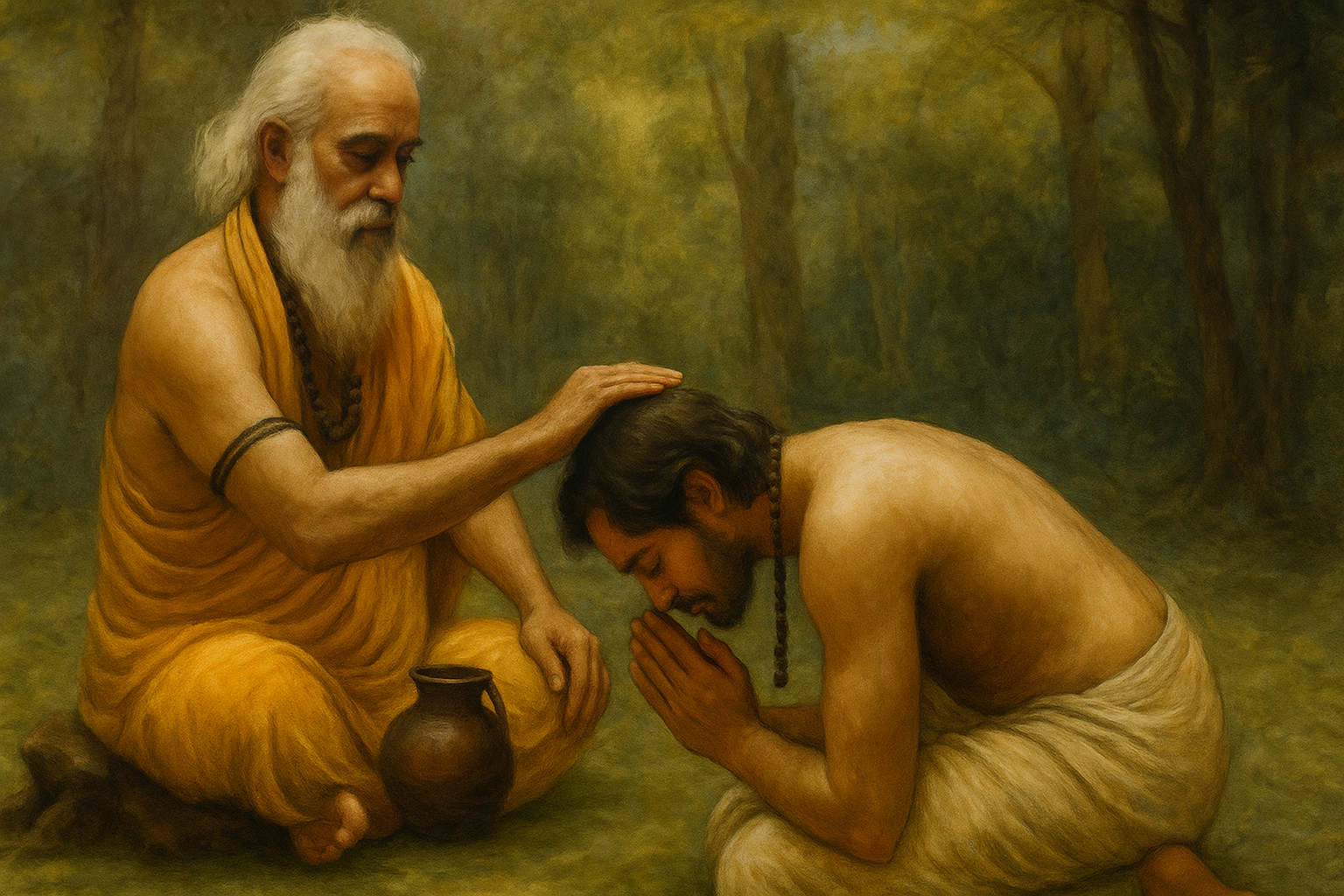
Guru Diksha initiates karma kshalan, the purification of accumulated karmas. The sacred Guru-disciple bond enables liberation from prarabdha karma. When divine power flows from the Guru’s hand onto the disciple’s crown chakra, the disciple feels reborn. This is not imagination but a transmission of energy that reshapes the aura or pranamaya kosha.
Sitting in the Guru’s aura, the disciple experiences peace and clarity. A single touch from the Guru’s hand on the disciple’s forehead can burn through the karmic load of past lives. The baggage hidden deep in the chitta (subconscious) begins to release. What remains is a soul prepared for moksha, or spiritual liberation.
The Human Body: A Divine Vehicle
Human birth is rare and sacred. Even devas or celestial beings praise the chance to attain a human body, for only here can one achieve Bhakti (devotion) and Mukti (liberation). While divine beings enjoy the fruits of good karma, they cannot perform spiritual sadhana to attain God. Only through human life can one transcend the chakra of birth and death.
Spiritual traditions like Shaivism, rooted in the yogic soil of Kashmir, emphasize the love between Shiva and Shakti as the highest form of devotion. In contrast, modern interpretations often equate love with temporary pleasure, missing the deeper essence of divine union.
Inner Journey Begins: From Bahirmukha to Antarmukha
As past-life samskaras start dissolving, the disciple enters deeper states of dhyana (meditation). The outward-facing mind, or bahirmukha chetana, begins turning inward. This shift to antarmukha sadhana reveals new inner realities. True spirituality is not about judging others’ faults but about facing one’s own inner mirror. The Guru becomes that mirror, showing us our blind spots.
Self-recognition—atma bodha—becomes the turning point. When the disciple realizes their true identity beyond ego and form, they begin preparing to merge into Parabrahma Shakti.
Breaking the Bonds of Attachment
The Guru gives direction to the disciple’s life—from material to spiritual. Yet this path is not without trials. As one evolves spiritually, relationships begin to dissolve. Friends, family, and social ties often fade away. This is not cruelty but divine design. These ties, governed by runa-bandhana (karmic debt), must fall away so attachment doesn’t block the path to moksha.
The Guru is more precious than the philosopher’s stone. The stone can turn iron into gold, but the Guru transforms the disciple into a living embodiment of divine wisdom. Saints like Tulsidas and Kabir have glorified the Guru beyond imagination. The Guru molds the disciple through tapas and compassion, just as a potter shapes clay with force and finesse.
The Exam of Karma and Inner Strength
As the disciple progresses, deeper karmas from previous births surface. Just like a student must face exams after studying, the spiritual seeker must face trials. These karmic tests often feel like suffocating webs. The disciple may feel lost or stuck. But the Guru Kripa (grace of the Guru) becomes the lifeline.
Even when the seeker falls, the Guru lifts them up. The Shaktipaat from the Guru burns away impurities of the manas (mind), buddhi (intellect), and ahankara (ego). The Guru expends his own spiritual energy to purify the disciple. Not everyone receives this; those who do are immensely fortunate.
Our scriptures and saints tell us how disciples who surrendered fully became legends. This timeless parampara (lineage) of the Guru-disciple tradition is the soul of Indian spiritual culture.
That is why one must always begin with Charan Vandana—the inner bowing at the feet of the Guru. Meditate upon the Guru’s form. Offer your heart in surrender.
Respectful Pranams to my Gurus and to all Gurus who continue to guide the path of light.
गुरुब्रह्मान्ना पार्म्परागतिता च जयजेतां
Guru Parampara Ki Jai!
Post a Comment
-
Subscribe to Our Blog
-
Categories
-
Popular Articles
- Orange butterfly: Spiritual Significance
- The Dasa Mahavidyas
- Maa Bhuvaneshwari | The Dasa Mahavidyas
- The Ghosts of Ganagapur Temple, Karnataka
- Vivah Bandhan Curse – What Is It and How to Spiritually Heal It.
- Tripura Sundari | The Dasa Mahavidya
- What are Beej Mantras?
- Decoding the Maha Mrityunjay Mantra: Origin, Meaning, and Benefits
- The Five Shades of Tantra
- 9 Most Powerful Tantric Temples in India