

- Email info@ChamundaSwamiJi.com
- Call +1-516-933-7590
-
 Email
info@ChamundaSwamiJi.com
Email
info@ChamundaSwamiJi.com
-
 Call
+1-516-933-7590
Call
+1-516-933-7590


Book an Appointment
Hindu Rituals
Ganga Dussehra and Nirjala Ekadashi: The Deeper Mystical Significance
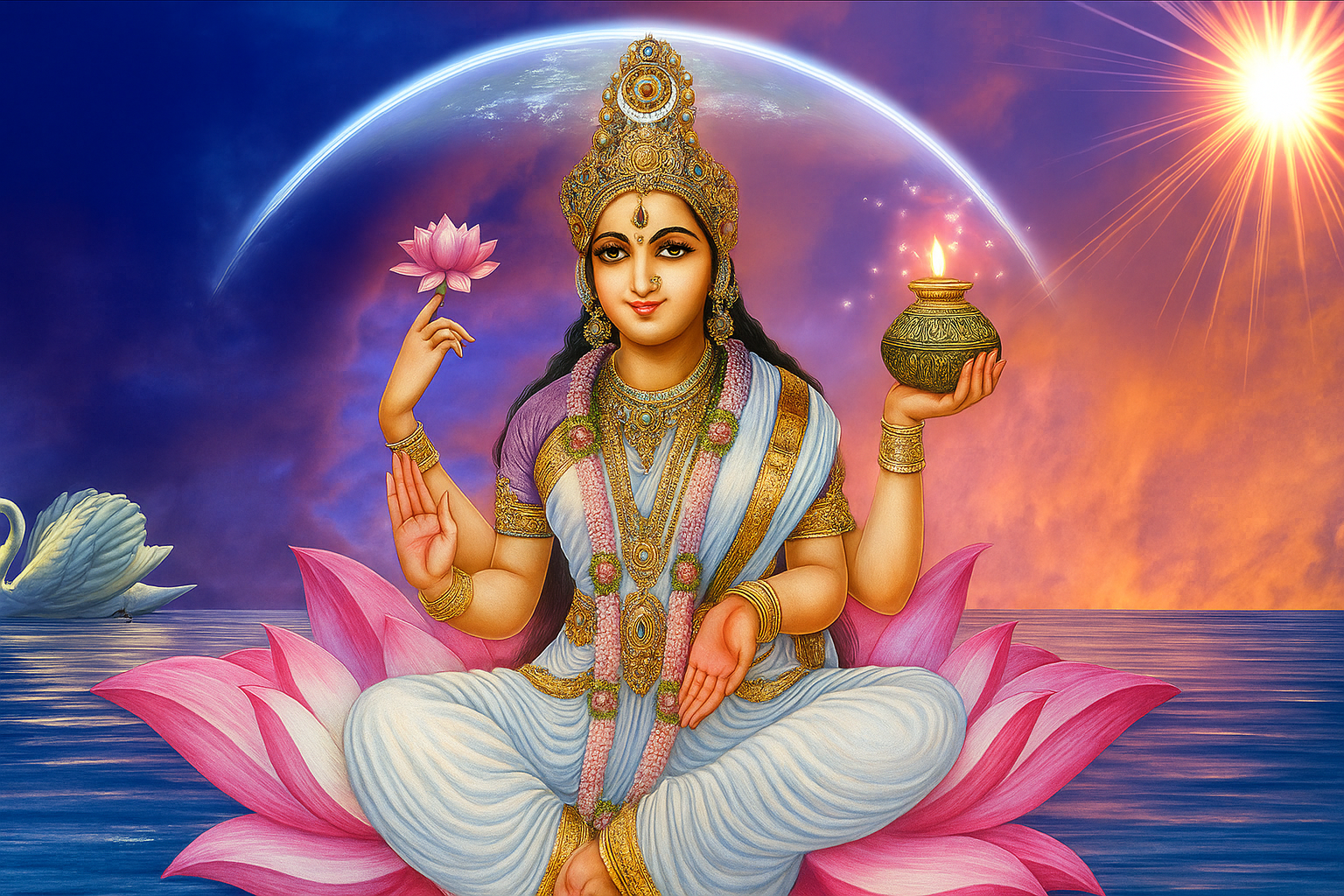
Nirjala Ekadashi Maa Ganga descended on Earth on the Dashami Tithi of Shukla Paksha in Jyeshtha month—an astrologically powerful period ruled by the intense solar energy of Jyeshtha Nakshatra. This day is celebrated as Ganga Dussehra, for on this Dashami (10th lunar day), the celestial river incarnated on Bhuloka (Earth).
In the deep traditions of Tantra and Puranic history, this descent was not a simple event—it was a result of cosmic karmic entanglement and spiritual tapasya. Sage Bhagirath, grandson of King Sagara, performed rigorous Brahma-Tapasya (penance towards Lord Brahma) to liberate the souls of his ancestors. Sixty thousand sons of Sagara were cursed and turned to ashes by Kapil Muni, an embodiment of Sattva-Jnana Shakti (pure knowledge energy).
Maa Ganga’s descent is also an allegory in Tantra for the descent of Kundalini Shakti from the crown chakra to the lower planes to purify karmas. Bhagirath symbolizes the aspirant whose penance awakens the descending energy.
But Ganga’s torrential force was uncontainable for Bhuloka. Hence, Bhagirath performed severe Shiva-Upasana—standing on one leg (known as Eka-Pada Tapasya)—to invoke Lord Shiva, the ultimate yogi and Adiguru of Tantra. Lord Shiva, pleased by Bhagirath’s devotion, captured Ganga in his Jata (matted hair), regulating her destructive force into a gentle flow. This cosmic act shows Shiva’s mastery over uncontrolled energies, much like controlling the mind’s wild tendencies in advanced yogic sadhana.
From that day, Ganga became known as Bhagirathi—the river descended due to Bhagirath’s tapasya.
Special Astrological Combination
If Ganga Dussehra falls on a Monday (Somvar) under Hasta Nakshatra, the purificatory power of the day multiplies, as the Moon (mind) and Mercury (intellect) both contribute to washing away deep-rooted karmic samskaras (mental impressions). Hence, the combination is highly auspicious for dissolving sins.
The Ten Sins Destroyed by Ganga Snan
As per Dharmashastra, bathing in Ganga on this day destroys ten types of papa (sins):
Sharirika Paap (Physical Sins) – 3 types
Vachika Paap (Verbal Sins) – 4 types
Manasika Paap (Mental Sins) – 3 types
This is directly aligned with the Tantric concept of Trikarana Shuddhi—purification of body, speech, and mind.
Rituals and Offerings
As the name ‘Dussehra’ indicates, the number 10 dominates this day:
Donate to 10 Brahmins.
Use only 10 flowers, lamps, fruits for puja.
Donate 16 handfuls of barley (Yava) and sesame (Til), representing Shodasha Kalas (16 phases of the moon, also linked to Tripura Sundari Tantra).
Donate Sattu (roasted gram flour)—a symbol of cooling during the extreme heat of Jyeshtha, balancing Pitta Dosha as per Ayurveda.
Nirjala Ekadashi: The Maha-Tapas of Ekadashi Vrat
Immediately after Ganga Dussehra comes Nirjala Ekadashi, one of the most intense vratas in the Vedic calendar.
Ekadashi itself corresponds to the 11th Tithi, ruled by the Vayu Tattva (Air Element), crucial for regulating prana in the body. On most Ekadashis, devotees observe a fast of grains and heavy foods, consuming only fruits and water to stabilize the nervous system and uplift spiritual consciousness.
Why Nirjala Ekadashi is Supreme
But Nirjala Ekadashi is different—it demands complete renunciation of even water (Nir-jala = without water). This extreme restraint invokes the Agni Tattva (Fire Element) within the sadhaka, burning accumulated karmas across multiple lifetimes.
Astrologically, Nirjala Ekadashi offers the combined fruits of observing all 24 Ekadashis in a year. It aligns with the intense solar power of Jyeshtha, where tapas (austerity) achieves maximum potency. Vedic astrology considers the energy of the 12 zodiac signs as operating simultaneously through the solar prana cycle on this Ekadashi.
The Powerful Phala (Fruit) of This Vrat
Bestows punya (virtue), arogya (health), moksha (liberation), and bhoga (material prosperity).
Grants Pitru Shanti (peace for ancestors).
Equal to donating crores of suvarna (gold coins) in every prahar (3-hour time cycle) of the day.
The Mahabharata Connection
Among the Pandavas, Bhima, ruled by powerful Mars (Mangal Graha), struggled to keep fasts due to his intense hunger. Veda Vyasa, the master of Vedanta and Tantra, instructed Bhima to observe just this Nirjala Ekadashi, which covers the fruits of all Ekadashis combined. Therefore, this vrata is also called Bhimaseni Ekadashi.
On this day, even a single drop of water is said to break the fast. Hence, discipline and inner fire (Agni) are paramount.
The Supreme Dana on Nirjala Ekadashi
As part of Pitrukarya (ancestor worship) and Dana Karma (charitable action), devotees offer:
Kalasha (water-filled urns)
Pankha (hand-fans)
Mangoes, melons, and other seasonal fruits
Sherbet (cooling drinks) to the poor and in temples
During these offerings, devotees chant:
Sanskrit (Devanagari):
ॐ नमो भगवते हृषीकेशाय, संसार-सागरात् त्रातुम्, कुम्भदानं करिष्ये, मोक्षं मे प्रयच्छ।
Transliteration:
Om Namo Bhagavate Hrishikeshaaya, Samsara-Saagaraat Traatum, Kumbha-Daanam Karishye, Moksham Me Prayaccha.
(O Lord Hrishikesh! Savior from the ocean of samsara! By donating this pitcher, grant me liberation.)
The Ideal Nirjala Ekadashi Practice
Stay awake throughout the night (Jagaran), engaging in Naam Japa (chanting), Dhyan (meditation), and Stotra Patha (hymn recitations).
Break the fast with water only after Dwadashi Tithi (12th lunar day).
Observing this vrata purifies both personal and ancestral karmas, leading ultimately to the Vaishnava Gati (supreme spiritual realm of Vishnu).
The Spiritual Synthesis
Both Ganga Dussehra and Nirjala Ekadashi represent the twofold path of Bhakti (devotion) and Tapasya (austerity)—one washes away karmic impurities externally through the sacred Ganga waters, the other burns them internally through the fire of self-restraint.
In Tantra, this is called Bahiranga and Antaranga Shuddhi — external and internal purification — ultimately leading the aspirant closer to Moksha (liberation from samsara).
By following these sacred observances with Shraddha (faith) and Samarpana (surrender), one aligns with the cosmic rhythms of Dharma, transcends karmic bondage, and moves closer to the eternal truth of Sanatana Dharma.
Even though plenty of literature is available on spiritual practices, it is highly recommended that one learn these methods under the supervision of a Guru or an expert. Everyone has unique spirituality, personality, and experiences. One solution cannot fit all. Therefore, seeking guidance from spiritual experts is imperative to get that unique mantra, meditation, and spiritual method crafted exclusively for you for the spiritual awakening you seek. And hence, we recommend you practice these interpretations and practices mentioned above under the guidance of an expert.
Please subscribe to our mailing list to stay connected and receive spiritual information. In case of any queries, please write to us at info@chamundaswamiji.com. You can check out our YouTube channel Chamunda Swamiji where you can learn Tantra, Mantra, Yantra, and Meditation from His Holiness Shri Chamunda Swamiji. If you seek to learn Shakti Kriya, please register with us, and we will get back to you.
Post a Comment
-
Subscribe to Our Blog
-
Categories
-
Popular Articles
- Orange butterfly: Spiritual Significance
- The Dasa Mahavidyas
- Maa Bhuvaneshwari | The Dasa Mahavidyas
- The Ghosts of Ganagapur Temple, Karnataka
- Vivah Bandhan Curse – What Is It and How to Spiritually Heal It.
- Tripura Sundari | The Dasa Mahavidya
- What are Beej Mantras?
- Decoding the Maha Mrityunjay Mantra: Origin, Meaning, and Benefits
- The Five Shades of Tantra
- 9 Most Powerful Tantric Temples in India