

- Email info@ChamundaSwamiJi.com
- Call +1-516-933-7590
-
 Email
info@ChamundaSwamiJi.com
Email
info@ChamundaSwamiJi.com
-
 Call
+1-516-933-7590
Call
+1-516-933-7590


Book an Appointment
Hindu Rituals
Gupt Navratri Sadhana: Unlocking the Secrets of Divine Feminine Power
The Divine Path to Dharma, Artha, Kama, and Moksha
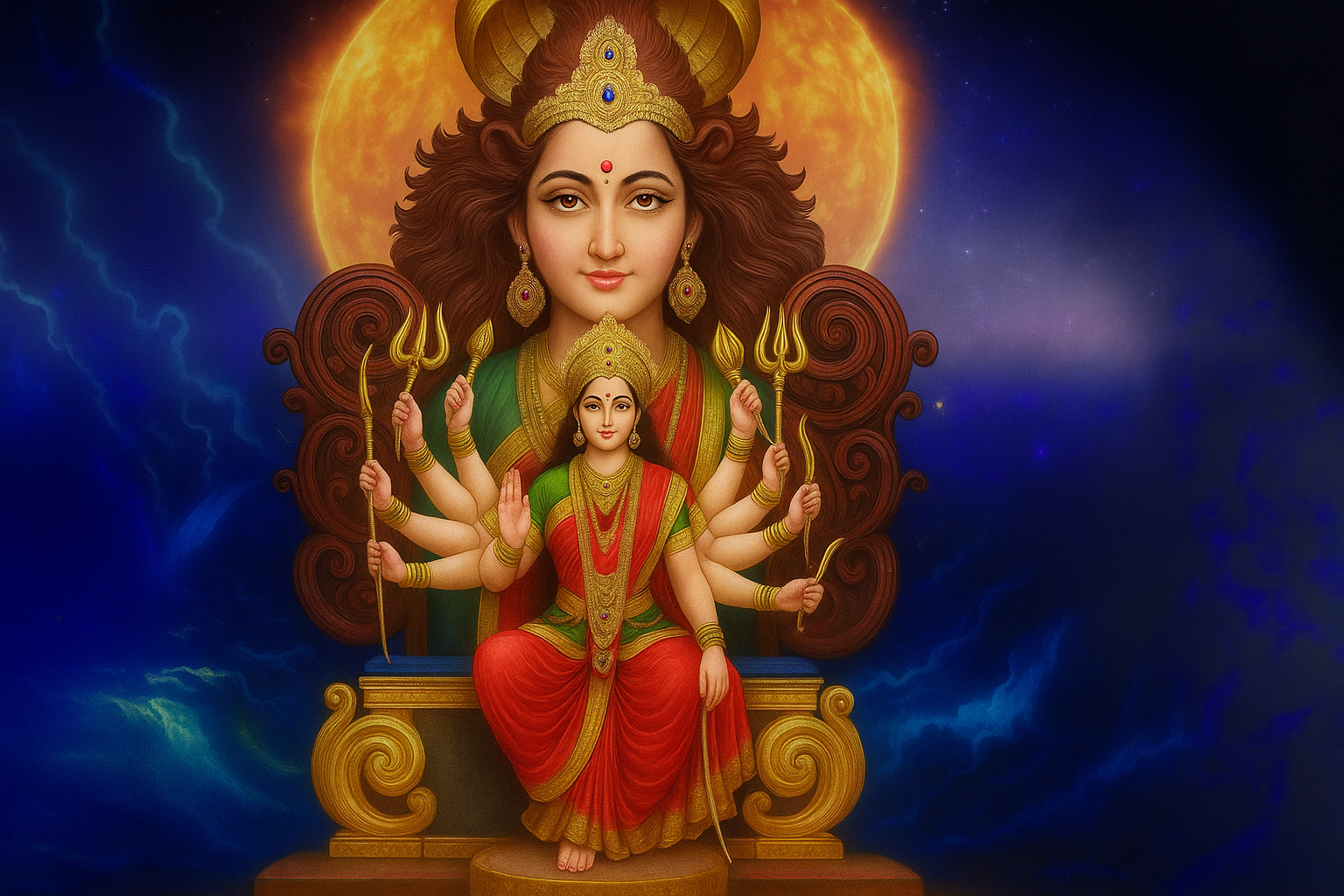
Gupt Navratri In Sanatan Dharma, the worship of Maa Bhagwati (the Divine Mother) is essential for achieving the four goals of life: Dharma (righteousness), Artha (prosperity), Kama (desires), and Moksha (liberation). She is not only the cosmic mother but also the one who showers unconditional love, grace, and compassion upon her devotees. Through her worship, one experiences spiritual elevation, self-realization, and complete worldly and spiritual success.
The Divine Mother’s blessings remove all obstacles, ensure a healthy and prosperous life, and develop wisdom and inner strength. Her devotees find peace even amidst life’s dualities, experiencing joy beyond worldly attachments.
Why Gupt Navratri Holds a Special Place in Tantra and Spiritual Practice
While most devotees celebrate Sharadiya Navratri and Chaitra Navratri with public festivities, Garba, Dandiya, and communal worship, Gupt Navratri remains a deeply personal and mystical spiritual journey. It is observed twice a year — once in the month of Ashadha (June-July) and once in Magha (January-February).
Unlike the popular Navratri celebrations in Gujarat and Bengal, Gupt Navratri is not widely practiced by householders. Instead, it is mainly observed by spiritual aspirants, tantric practitioners, and advanced seekers who follow the secret path of Tantra Sadhana to gain spiritual powers (siddhis), protection, and divine grace.
The Secret Sadhana of Gupt Navratri
During Gupt Navratri, devotees withdraw from social interactions and perform intense spiritual disciplines under the strict guidance of a realized Guru. These sadhanas are performed secretly and are not meant for public display. The aspirants often isolate themselves, maintaining minimal interaction with the outside world.
The core focus of Gupt Navratri lies in worshipping the Dasha Mahavidyas — the Ten Great Wisdom Goddesses of Tantra. Each Mahavidya embodies a specific aspect of divine power, and each sadhana addresses unique life aspects:
Maa Kali – For ultimate protection
Maa Tara – For liberation (moksha)
Maa Tripura Sundari – For beauty, love, and bliss
Maa Bhuvaneshwari – For strength and vital energy
Maa Chhinnamasta – For courage and sacrifice
Maa Bhairavi – For progress on the Tantric path
Maa Dhumavati – For secret mystical knowledge
Maa Baglamukhi – For victory over enemies
Maa Matangi – For mastery over speech and communication
Maa Kamala – For wealth and abundance
These powerful rituals are performed primarily between midnight and 3 AM, the most potent spiritual hours known as Nishitha Kaal. During this time, the subtle energies are most receptive to transformation and divine communion.
The Importance of Guru’s Guidance in Gupt Navratri
Gupt Navratri Sadhana is not recommended without proper initiation and supervision. Without a Guru’s guidance, one may not only fail to gain the benefits but also attract unnecessary spiritual complications. The secrecy and discipline maintained during these sadhanas are essential for their success and protection.
While Sharadiya and Chaitra Navratri focus on community worship and festive celebrations, Gupt Navratri is a deeply personal, silent, and inner journey — designed for those ready to walk the sacred path of Shakti Sadhana and Tantra.
The Feminine Power Always Comes First
In Sanatan Dharma, the divine feminine always precedes the masculine in invocation:
Sita-Ram
Lakshmi-Narayan
Radha-Krishna
This symbolizes the primacy of Shakti (energy) in creation, preservation, and dissolution. Without Shakti, even Shiva remains inactive. Thus, Navratri becomes the most auspicious time to honor this cosmic energy.
Who Should Perform Gupt Navratri Sadhana?
Seekers desiring spiritual advancement and self-realization
Those facing financial difficulties, debts, or health challenges
Individuals seeking victory in legal matters or overcoming enemies
Businessmen and professionals seeking success and growth
Those looking for protection against negative energies
Tantric practitioners aiming for Siddhi (mastery over spiritual powers)
Embrace the Path of Gupt Navratri 2025
Gupt Navratri is not merely a festival. It is a doorway to spiritual empowerment, inner alchemy, and union with the Divine Mother. For those willing to surrender with devotion, discipline, and proper guidance, Gupt Navratri can open realms of profound transformation.
May Maa Bhagwati bless you with strength, wisdom, and ultimate liberation.
Even though plenty of literature is available on spiritual practices, it is highly recommended that one learn these methods under the supervision of a Guru or an expert. Everyone has unique spirituality, personality, and experiences. One solution cannot fit all. Therefore, seeking guidance from spiritual experts is imperative to get that unique mantra, meditation, and spiritual method crafted exclusively for you for the spiritual awakening you seek. And hence, we recommend you practice these interpretations and practices mentioned above under the guidance of an expert.
Please subscribe to our mailing list to stay connected and receive spiritual information. In case of any queries, please write to us at info@chamundaswamiji.com. You can check out our YouTube channel Chamunda Swamiji where you can learn Tantra, Mantra, Yantra, and Meditation from His Holiness Shri Chamunda Swamiji. If you seek to learn Shakti Kriya, please register with us, and we will get back to you.
Post a Comment
-
Subscribe to Our Blog
-
Categories
-
Popular Articles
- Orange butterfly: Spiritual Significance
- The Dasa Mahavidyas
- Maa Bhuvaneshwari | The Dasa Mahavidyas
- The Ghosts of Ganagapur Temple, Karnataka
- Vivah Bandhan Curse – What Is It and How to Spiritually Heal It.
- Tripura Sundari | The Dasa Mahavidya
- What are Beej Mantras?
- Decoding the Maha Mrityunjay Mantra: Origin, Meaning, and Benefits
- The Five Shades of Tantra
- 9 Most Powerful Tantric Temples in India