

- Email info@ChamundaSwamiJi.com
- Call +1-516-933-7590
-
 Email
info@ChamundaSwamiJi.com
Email
info@ChamundaSwamiJi.com
-
 Call
+1-516-933-7590
Call
+1-516-933-7590


Book an Appointment
Informative
Mahalaya 2025: Date, Rituals, Legends, and the Spiritual Meaning
Have you ever noticed how certain days in the Hindu calendar feel heavier, more sacred, almost like the air itself carries ancient whispers? Mahalaya Amavasya is one such day. It not only marks the beginning of the Durga Puja festivities but also closes the period of Pitru Paksha, when Hindus honor their ancestors through rituals and prayers.
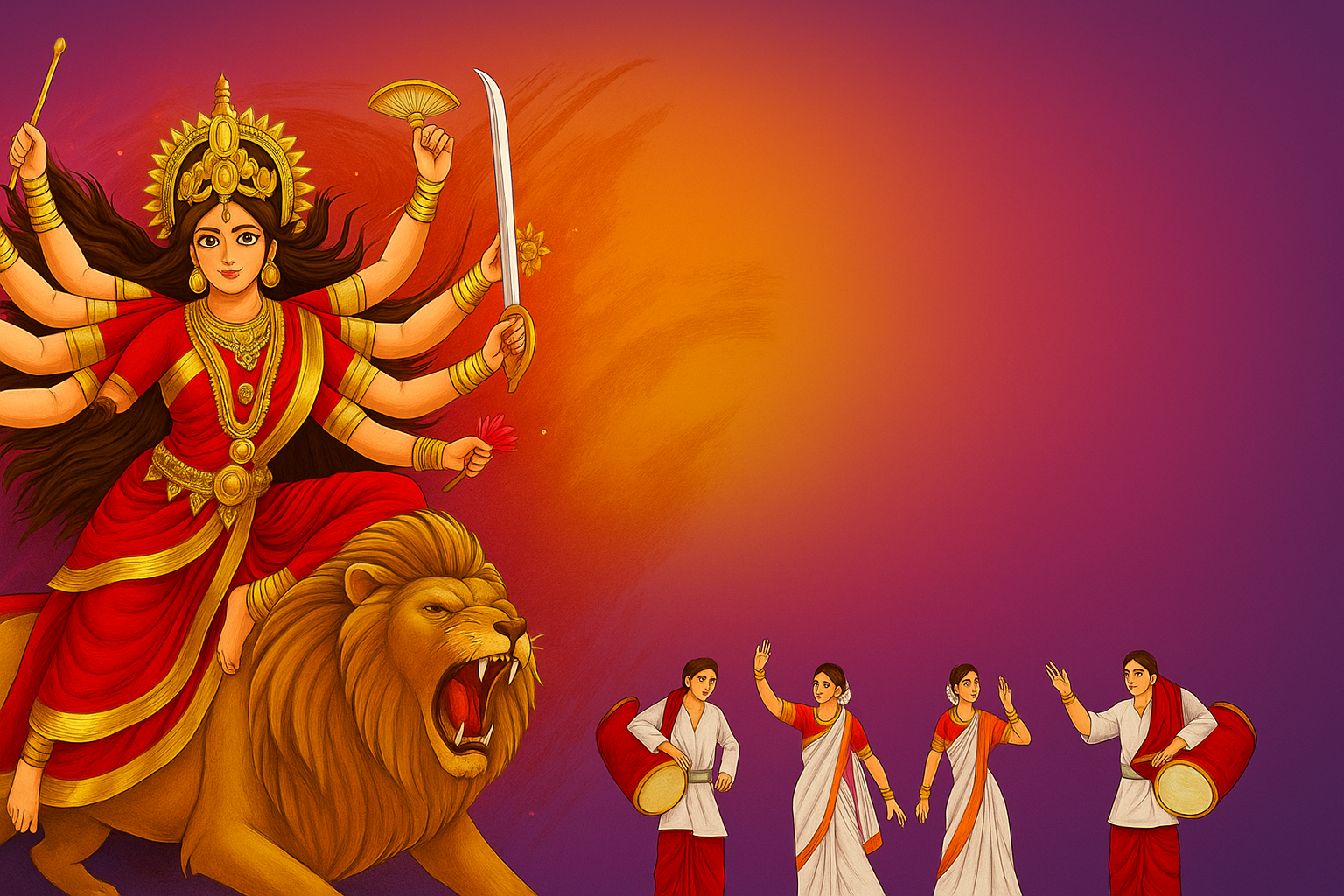
In 2025, Mahalaya falls on September 22 (Monday). On this day, Bengalis across the world will wake up before dawn to the stirring sound of the Mahishasura Mardini stotra a powerful chant invoking Goddess Durga’s victory over the buffalo-demon Mahishasura. For many, it is the emotional signal that Durga Puja has truly arrived.
But Mahalaya is not just about invoking the Goddess. It’s equally about remembering our ancestors, offering tarpan, and acknowledging the invisible yet unbroken bond between the living and the departed.
Rituals of Mahalaya: The Sacred Tarpan
The most important ritual of Mahalaya is Tarpan, performed at the banks of rivers, ponds, or sacred water bodies. Devotees offer water, sesame seeds, and food with prayers for the peace of their departed ancestors’ souls.
The philosophy here is simple yet profound: our ancestors gave us life, culture, and dharma. Even if they are not physically with us, their blessings continue to shape our destiny. By offering tarpan, we do not “feed” the departed in a literal sense, but rather acknowledge gratitude, seek forgiveness, and strengthen the karmic link of our lineage.
The Story of Karna and Pitru Paksha
There is a popular Bengali legend associated with Mahalaya, often linked with the Mahabharata, though it does not appear in the original epic. The story goes like this:
Karna, the mighty warrior, ascended to heaven after his death in the Kurukshetra war. But to his surprise, instead of food, he was offered only gold and jewels to eat. Confused, he asked Lord Indra the reason. It was then revealed that while Karna had given away immense wealth during his lifetime, he had never once offered food or water to his ancestors.
Shaken by this realization, Karna prayed to Lord Yama (the god of death) for a chance to correct his mistake. Out of compassion, Yama allowed Karna to return to earth for 15 days to perform the necessary rituals and offer food to his ancestors. This period came to be known as Pitru Paksha, culminating in Mahalaya Amavasya.
This legend, though not a part of the authentic Mahabharata text, carries a timeless moral: wealth and power mean little if gratitude to one’s roots and ancestors is forgotten.
The Sound of Mahalaya: Mahishasura Mardini
For Bengalis, Mahalaya is incomplete without the early morning broadcast of “Mahishasura Mardini,” a two-hour audio program that combines recitation of the Devi Mahatmya (Chandi Path) with devotional songs.
The deep voice of Birendra Krishna Bhadra narrating the stotras has become synonymous with the spirit of Mahalaya. It sets the stage for the grand arrival of Durga the Mother who destroys evil and restores dharma.
Have you ever noticed how just listening to these chants can change the mood of an entire household? It’s as if the vibration itself cleanses fear and fills hearts with devotion and anticipation.
Why Do Ancestor Rituals Matter in Today’s World?
You might wonder in 2025, with AI, space tech, and global competition, why should we still be pouring water into the river, chanting mantras, and offering rice balls to unseen ancestors? Isn’t it outdated? Actually, it’s more relevant now than ever. Let’s see why.
1. Healing Unseen Emotional Bonds
Every family carries not only DNA but also karmic memory. Tantric texts describe this as pitru rin ancestral debts. Sometimes, the struggles you face in relationships, finances, or even health are not entirely “yours” but patterns passed down generations. Performing rituals like tarpan is a way of saying: I acknowledge you, I honor you, I release you. Psychologists today call this “ancestral trauma healing.” Our rishis had already created a ritual framework for it thousands of years ago.
2. Reconnecting the Disconnected Generation
Let’s be honest the younger generation often feels cut off from their roots. Global lifestyles, fast-paced careers, and digital living make them wonder: What does my grandfather’s ritual have to do with my life? The truth is, without roots, no tree survives. Pitru rituals are like remembering your own source-code — where you come from. Just lighting a lamp for your ancestors or offering water can build a deep sense of belonging and stability, even for a restless modern mind.
3. A Pause From Individualism
Modern life constantly tells us: Me, my career, my success, my happiness. Ancestor rituals shift the focus: What about those before me? What about those after me? This breaks the ego’s illusion and creates humility. You realize you’re part of a chain not the beginning, not the end, but a link. Isn’t that liberating?
4. Energy Cleansing for the Family Lineage
In Tantra, the family line (gotra) is seen as an energy stream. If that stream is blocked, the descendants face obstacles like water stuck behind a dam. Through Shraddha and Tarpan, these blockages are cleared, and blessings flow again. In contemporary language: you stop carrying the “emotional baggage” of your family and start living lighter.
5. Inner Peace Through Gratitude
Gratitude is a proven mental health booster modern psychology and neuroscience agree. Rituals for ancestors are a structured way of practicing gratitude. By remembering them, you shift your mindset from scarcity (what I don’t have) to abundance (I am here because of countless sacrifices before me). This inner shift creates calm, contentment, and strength to face today’s uncertainties.
Mahalaya as a Bridge Between Past and Present
Mahalaya, therefore, is not about looking backward with nostalgia alone. It’s about carrying forward ancestral energy into the present.
Ask yourself:
What strengths did I inherit from my ancestors?
What unfinished stories am I carrying forward?
How can I honor their sacrifices by living more consciously today?
When you light a diya, offer water, or even silently remember your ancestors on Mahalaya, you are not only praying for them you are also aligning yourself with the cosmic continuity of dharma.
Mahalaya 2025: Why It Matters More Than Ever
In 2025, as the world races forward with AI, technology, and global uncertainty, rituals like Mahalaya remind us of timeless truths. No matter how modern we become, our roots hold us steady.
The chants of Mahishasura Mardini remind us of the eternal fight between good and evil, both in society and within ourselves.
The tarpan offerings remind us of gratitude and humility.
The legend of Karna reminds us not to ignore small yet essential duties.
And the arrival of Durga reminds us that divine feminine energy continues to protect, nurture, and guide humanity.
Reflection
So, when Mahalaya arrives this September, don’t think of it as “just another ritual day.” See it as a spiritual reset a chance to connect with your ancestors, awaken the goddess within, and prepare for the divine celebration of Durga Puja.
Even if you can’t perform elaborate rituals, pause for a moment. Light a lamp, chant a prayer, remember your grandparents, or simply express gratitude in your own words. The spirit of Mahalaya is not bound by rules it’s about love, remembrance, and awakening.
Because ultimately, Mahalaya is not only the invocation of Durga. It is also the invocation of our roots.
May this Mahalaya 2025 reconnect you with your lineage, fill your heart with the blessings of your ancestors, and prepare your spirit for the embrace of Goddess Durga.
Even though plenty of literature is available on spiritual practices, it is highly recommended that one learn these methods under the supervision of a Guru or an expert. Everyone has unique spirituality, personality, and experiences. One solution cannot fit all.
Therefore, seeking guidance from spiritual experts is imperative to get that unique mantra, meditation, and spiritual method crafted exclusively for you for the spiritual awakening you seek. And hence, we recommend you practice these interpretations and practices mentioned above under the guidance of an expert. Please subscribe to our mailing list to stay connected and receive spiritual information. In case of any queries, please write to us at info@chamundaswamiji.com.
You can check out our YouTube channel Chamunda Swamiji where you can learn Tantra, Mantra, Yantra, and Meditation from His Holiness Shri Chamunda Swamiji. If you seek to learn Shakti Kriya, please register with us, and we will get back to you.
Post a Comment
-
Subscribe to Our Blog
-
Categories
-
Popular Articles
- Orange butterfly: Spiritual Significance
- The Dasa Mahavidyas
- Maa Bhuvaneshwari | The Dasa Mahavidyas
- The Ghosts of Ganagapur Temple, Karnataka
- Vivah Bandhan Curse – What Is It and How to Spiritually Heal It.
- Tripura Sundari | The Dasa Mahavidya
- What are Beej Mantras?
- Decoding the Maha Mrityunjay Mantra: Origin, Meaning, and Benefits
- The Five Shades of Tantra
- 9 Most Powerful Tantric Temples in India