

- Email info@ChamundaSwamiJi.com
- Call +1-516-933-7590
-
 Email
info@ChamundaSwamiJi.com
Email
info@ChamundaSwamiJi.com
-
 Call
+1-516-933-7590
Call
+1-516-933-7590


Book an Appointment
Informative
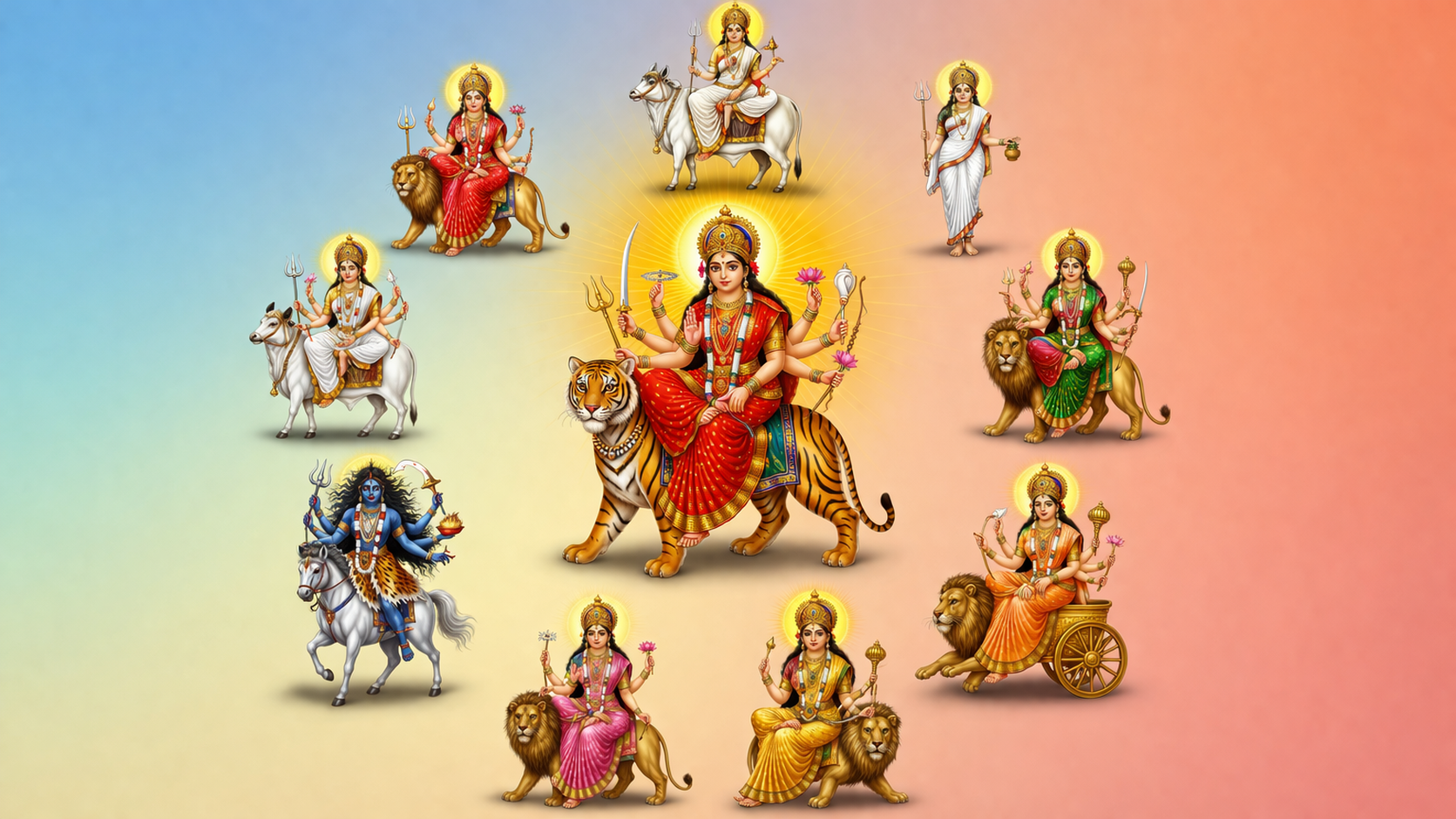
9 Inner Demons Maa Durga Helps You Conquer During Navratri
You thought you were just fasting. Just avoiding certain foods. Just following tradition for nine days in devotion to Maa Durga. But somewhere between the silence, the cravings, and the emotional waves… something else starts surfacing. Old patterns feel louder. Reactions feel sharper. And parts of you you usually ignore begin asking for attention almost as if Maa Durga herself is bringing them into your awareness.
This is not accidental. During Chaitra Navratri or Sharadiya Navratri, the energy you invoke does not only bless you. It reveals you. What you call devotion is often a process of exposure. What you call discomfort is often a sign that something within you is being challenged.
Most people approach Navratri thinking it is about pleasing the Goddess. They focus on rituals, fasting, and Navratri bhog for each day, hoping for external results. But what if the deeper purpose of Navratri is not to give you something new, but to remove what is already blocking you? What if Maa Durga is not just protecting you from the outside world, but confronting what is misaligned within you?
In yogic and tantric understanding, every demon in the Devi’s story represents a psychological and energetic pattern within the human system. The battle is not happening somewhere else. It is happening within your thoughts, your reactions, your habits, and your unconscious tendencies. These nine days are not just a festival. They are a mirror.
Here are the 9 inner demons Maa Durga helps you confront and transform during Navratri.
9 Inner Demons Maa Durga Transforms During Navratri
These are not just symbolic demons from scripture. They are energetic tendencies stored in your system. Maa does not “kill” them the way stories describe. She alters the energy that sustains them.
That is why Navratri does not always feel peaceful. Sometimes it feels like things are falling apart inside. In reality, something deeper is being reorganized.
1. Madhu-Kaitabha — Confusion and Mental Overload
This is not just overthinking. It is scattered prana. Your attention is divided, constantly pulled in different directions.
When you sit for japa or even simple silence during Navratri, you may notice your mind becoming louder before it becomes quiet. This is the first stage. Maa’s energy begins to pull scattered attention back into a single stream. Clarity does not come instantly. It emerges after the noise exhausts itself.
2. Mahishasura — Ego in Disguise
Ego here is not pride. It is identification. The constant need to control how life unfolds.
During Navratri, situations may not go as planned. People may not respond the way you expect. This friction is not random. Maa is weakening your attachment to control. When control loosens, awareness expands. What feels like loss of control is actually the beginning of inner space.
3. Shumbha — Comparison and Superiority
This pattern feeds on outward attention. You constantly measure yourself against others.
Maa does not remove this by force. She redirects your energy inward. Through fasting, chanting, and reduced external stimulation, your mind slowly loses interest in comparison. The more your awareness stabilizes within, the less external validation holds weight.
4. Nishumbha — Insecurity and Dependency
This is the need to be reassured. To feel held by someone or something outside you.
During Navratri, you may feel emotionally exposed. Situations may arise where you do not get the support you expect. This is not absence of grace. Maa is withdrawing external support temporarily so inner strength can activate. Stability begins to form from within, not from others.
5. Raktabeeja — Repeating Negative Patterns
This is the most frustrating pattern. The same reactions repeat, even when you are aware of them.
Maa does not fight this pattern directly. She changes your relationship with it. During Navratri, awareness increases. You begin to see the pattern before it fully takes over. That small gap is where transformation begins. When reaction reduces, the pattern slowly loses its fuel.
6. Chanda — Impulsive Anger
Anger here is unprocessed energy. It bursts out because it has not been understood.
Fasting and discipline reduce sensory distractions. What was suppressed starts surfacing. You may feel more reactive. This is not worsening. Maa is bringing suppressed energy to the surface so it can be seen clearly. Once seen without reaction, it begins to dissolve.
7. Munda — Dullness and Avoidance
This is tamas. The heaviness that keeps you stuck in inaction.
During Navratri, even small practices like waking early, lighting a diya, or chanting begin to shift your internal rhythm. This is how Maa works here. Not through intensity, but through consistency. Slowly, inertia reduces. Movement begins without force.
8. Dhumralochana — Distorted Perception
You assume, overinterpret, and create stories that are not fully real.
Maa’s energy here works through disruption. Situations arise where your assumptions are challenged. You realize that what you believed was not entirely true. This can feel uncomfortable, but it is essential. She is clearing the lens through which you see life.
9. Kalaratri — Fear of the Unknown
At the root of all patterns is fear. Fear of losing identity. Fear of stepping into something unfamiliar.
Maa Kalaratri does not comfort this fear. She takes you into it. Situations may feel uncertain. Plans may feel unclear. But if you stay present, something shifts. You realize the fear was not as solid as it felt. Beyond it, there is a strange stillness. That stillness is strength.
What This Means for Your Navratri
This is why Navratri is not always peaceful. Some days you feel connected. Some days you feel irritated, confused, or emotionally heavy.
Both are part of the same process.
Maa is not only giving blessings. She is restructuring your inner system. What is not aligned begins to loosen. What is ready begins to strengthen.
If you understand this, you stop resisting the process. You start cooperating with it.
One Simple Practice During These Nine Days
Choose one pattern that is most active right now. Do not try to fix it.
Sit for at least 21 minutes daily. Watch how this pattern arises. Notice the trigger. Notice the body’s reaction. Notice the thought that follows.
Do nothing else.
This simple observation begins to separate you from the pattern. And once that separation begins, Maa’s work becomes faster and clearer within you.
Closing Insight from HH Shri Chamunda Swamiji
Navratri is not just about Navratri fasting rules or performing rituals correctly. It is a period where the Devi’s energy actively engages with your inner world.
If approached with awareness, these nine days can shift patterns that have stayed for years. But this requires maturity. It requires guidance.
Under the direction of HH Shri Chamunda Swamiji, one begins to understand that these inner disturbances are not obstacles. They are part of the process. With the right guidance, even confusion and emotional intensity can become a doorway to deeper clarity.
Jai Mata Di.
Post a Comment
-
Subscribe to Our Blog
-
Categories
-
Popular Articles
- Orange butterfly: Spiritual Significance
- The Dasa Mahavidyas
- Maa Bhuvaneshwari | The Dasa Mahavidyas
- The Ghosts of Ganagapur Temple, Karnataka
- Vivah Bandhan Curse – What Is It and How to Spiritually Heal It.
- Tripura Sundari | The Dasa Mahavidya
- What are Beej Mantras?
- Decoding the Maha Mrityunjay Mantra: Origin, Meaning, and Benefits
- The Five Shades of Tantra
- 9 Most Powerful Tantric Temples in India