

- Email info@ChamundaSwamiJi.com
- Call +1-516-933-7590
-
 Email
info@ChamundaSwamiJi.com
Email
info@ChamundaSwamiJi.com
-
 Call
+1-516-933-7590
Call
+1-516-933-7590


Book an Appointment
Informative
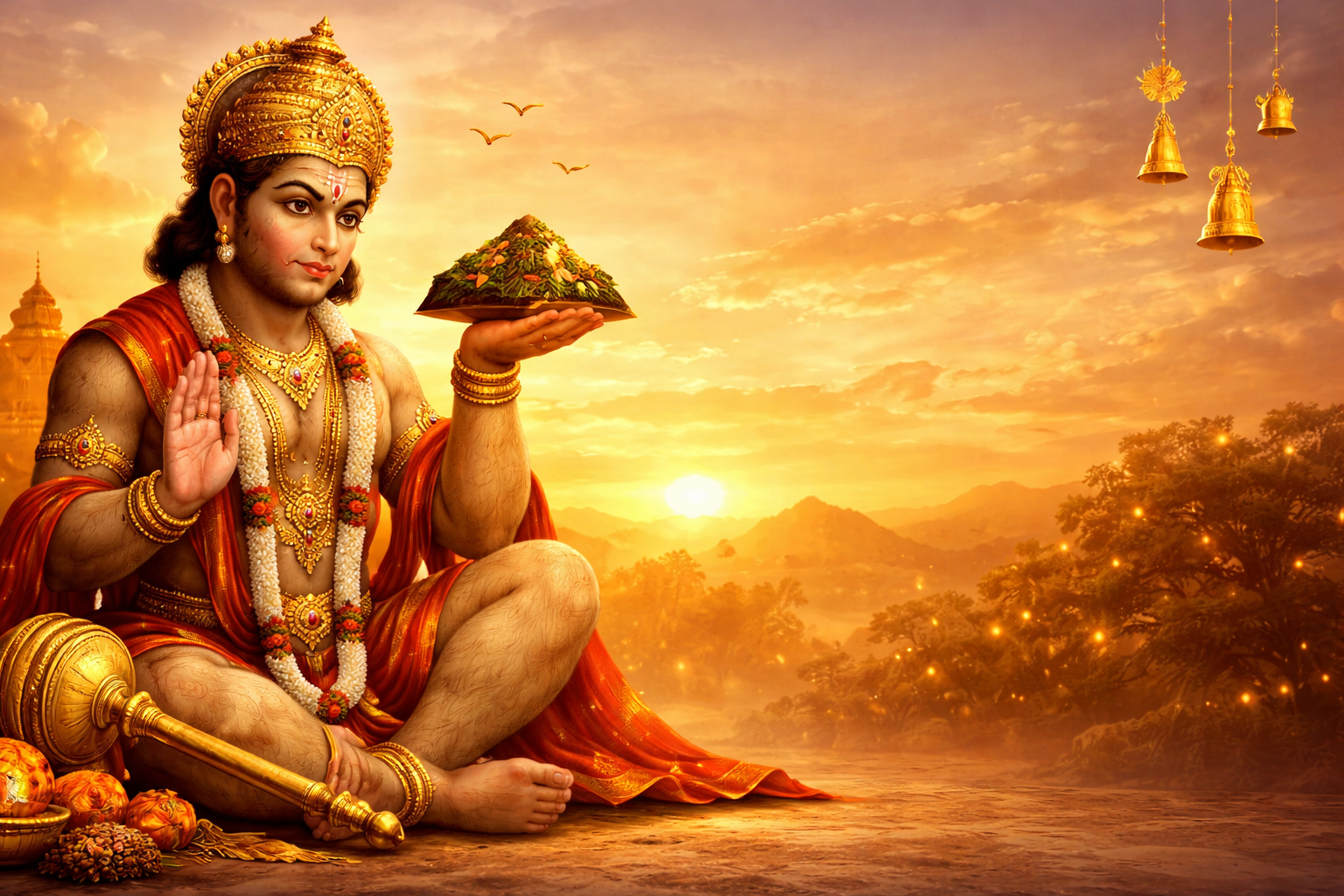
Special Observances for Hanuman Jayanti
Hanuman Jayanti has been described since ancient times in our sacred scriptures especially in the Ramayana and various Puranas. In these texts, Lord Hanuman is portrayed as a profoundly divine, inspiring, and spiritually powerful presence. Hanuman Jayanti is not merely celebrated as the birth anniversary of Lord Hanuman, but as the highest embodiment of devotion (bhakti), strength (bal), wisdom (buddhi), and selfless service (seva).
Divine Birth and Origin of Hanuman Ji
According to the scriptures, Hanuman Ji was born on the full moon day (Purnima) of the Chaitra month to Mother Anjana and Vanar King Kesari. He is considered an incarnation of the Wind God (Vayu), which is why he is revered as Pavanputra. From birth itself, Hanuman Ji possessed extraordinary powers. His childhood attempt to swallow the sun, mistaking it for a fruit, symbolizes his divine and boundless energy.
Hanuman Ji in the Ramayana
In the Ramayana, his character stands as the ultimate example of complete surrender and unwavering devotion to Lord Rama. Whether it is finding Mother Sita, burning Lanka, or bringing the Sanjeevani herb to save Lakshmana’s life he accomplished the impossible with effortless grace.
Scriptural Glory and Divine Powers
The Skanda Purana, Padma Purana, and Brahmanda Purana describe him as immortal (Chiranjivi), the bestower of the eight siddhis and nine treasures, and a divine being who continues to exist even in Kaliyuga.
Spiritual Benefits of Hanuman Jayanti Worship
Worship, recitation of the Hanuman Chalisa, Sundarkand, and mantra chanting on Hanuman Jayanti are considered especially powerful. These practices remove fear, negativity, planetary afflictions, and life obstacles, while awakening courage, confidence, and positive energy within.
In this way, the teachings of Hanuman Jayanti remind us that through true devotion, humility, and selfless service, a person can overcome every difficulty in life and walk steadily on the path of spiritual evolution.
Worshipping Hanuman Ji removes all fears and troubles. Afflictions related to Saturn (Shani Dosha) and Rahu-Ketu are pacified. One gains courage, confidence, and success.
On the sacred occasion of Hanuman Jayanti, the recitation of Hanuman Chalisa, Sundarkand, and Bajrang Baan is considered extremely fruitful and transformative.
According to the scriptures, Hanuman Ji is the very symbol of strength.
Hanuman Ji: The Supreme Devotee
Hanuman Ji stands as the highest example of devotion. His unwavering and eternal devotion to Lord Rama is unmatched. He played a vital role in restoring Lord Rama to his rightful kingdom and helped Sugriva and Vibhishana attain their royal thrones. Yet, for himself, he chose only the sacred feet of Lord Rama as his eternal refuge.
Hanuman Ji teaches the essence of selfless service. His life conveys a timeless truth: “True devotion itself contains the greatest power.” The Skanda Purana, Brahmanda Purana, and Padma Purana describe him as immortal (Chiranjivi), the bestower of Ashta Siddhi and Nava Nidhi, and the supreme devotee of Lord Rama representing the highest state of devotion. This becomes a living source of inspiration that every individual can adopt in their own life.
In the Ramayana, Hanuman Ji’s divine role is seen through his search for Mother Sita, the burning of Lanka, and bringing the Sanjeevani herb to save Lakshmana’s life.
Auspicious Practices on Hanuman Jayanti
On the occasion of Hanuman Jayanti, certain auspicious actions can help reduce negative influences in your life:
Feed monkeys with jaggery, roasted gram, and bananas
Light a lamp under a Peepal tree
Offer food to the poor and needy
Sit in a शांत (peaceful) place, close your eyes, and meditate on the radiant form of Hanuman Ji
Hold the भावना (feeling): “The same strength, courage, and devotion that resides in Hanuman Ji is awakening within me.” Meditate on this for a few minutes
There are powerful mantras that can be chanted during this sacred time. Wake up during Brahma Muhurta, take a bath, and take a vow (sankalp) of fasting.
Prepare your पूजा स्थान (altar) by placing a red cloth and installing an idol or image of Hanuman Ji. Light a lamp using mustard oil. Offer sindoor, jasmine oil, red flowers, jaggery with gram, tulsi leaves, and bananas. Then chant the mantra as per your capacity.
Mantras for Hanuman Jayanti
1. मूल मंत्र (Root Mantra):
Hindi: ॐ हं हनुमते नमः
English (Transliteration): Om Ham Hanumate Namah
You can chant this 108 times.
2. संकट मोचन मंत्र (Remover of Obstacles):
Hindi: ॐ नमो भगवते हनुमते नमः
English (Transliteration): Om Namo Bhagavate Hanumate Namah
This mantra removes all obstacles and difficulties.
3. पाठ (Recitations):
Recite Bajrang Baan and Hanuman Chalisa обязательно (must).
These remove mental fear, negativity, and inner disturbances.
Offer Chola (sacred covering) to Hanuman Ji, made of sindoor and jasmine oil. Perform Aarti by singing:
“आरती कीजै हनुमान लला की…”
“Aarti Kijai Hanuman Lala Ki…”
Ancient Hanuman temples are an essential part of India’s spiritual heritage. These temples are not just places of worship, but powerful centers of devotion, strength, and miraculous experiences. Many are mentioned in scriptures and folklore, where devotees continue to arrive with deep faith and prayers.
Prominent Ancient Hanuman Temples
Hanuman Garhi is an ancient and highly revered temple. It is believed that Hanuman Ji protected the birthplace of Lord Rama from here. Devotees climb 76 steps to receive darshan.
Sankat Mochan Hanuman Temple is believed to have been established by Goswami Tulsidas. Recitation of Hanuman Chalisa here is considered especially powerful. It is known as a place that removes all difficulties.
Mehandipur Balaji Temple is a mysterious and miraculous temple. People come here especially for relief from negative energies and unseen obstacles. Balaji (Hanuman Ji) is worshipped as the remover of crises.
Jakhoo Hanuman Temple is situated on a hilltop. It is believed that Hanuman Ji rested here while searching for the Sanjeevani herb. The massive Hanuman statue is a major attraction.
Salasar Balaji Temple presents a unique form of Hanuman Ji with a beard and mustache. This temple is believed to be around 300 years old and attracts devotees from far and wide.
In these temples, Hanuman Ji is worshipped as Sankat Mochan—the remover of difficulties, the embodiment of strength, and the divine protector. Tuesdays and Saturdays witness large gatherings of devotees.
The recitation of Hanuman Chalisa, Sundarkand, and mantra chanting here is considered extremely powerful. Worshipping in these sacred spaces can bring profound spiritual growth and blessings.
Guidance From HH Shri Chamunda Swamiji
If you are facing obstacles, fear, instability, or unseen challenges in life, this sacred occasion of Hanuman Jayanti is a powerful opportunity to realign your energy through devotion and sadhana. Through the grace of Hanuman Ji, even the heaviest karmic burdens can begin to dissolve when approached with sincerity and faith. If you feel called to go deeper on this path and seek guidance for your personal spiritual journey, you may connect for blessings and direction from HH Shri Chamunda Swamiji. Let your devotion become your strength, and your surrender become your protection. Jai Hanuman. Jai Mata Di.
Post a Comment
-
Subscribe to Our Blog
-
Categories
-
Popular Articles
- Orange butterfly: Spiritual Significance
- The Dasa Mahavidyas
- Maa Bhuvaneshwari | The Dasa Mahavidyas
- The Ghosts of Ganagapur Temple, Karnataka
- Vivah Bandhan Curse – What Is It and How to Spiritually Heal It.
- Tripura Sundari | The Dasa Mahavidya
- What are Beej Mantras?
- Decoding the Maha Mrityunjay Mantra: Origin, Meaning, and Benefits
- The Five Shades of Tantra
- 9 Most Powerful Tantric Temples in India