

- Email info@ChamundaSwamiJi.com
- Call +1-516-933-7590
-
 Email
info@ChamundaSwamiJi.com
Email
info@ChamundaSwamiJi.com
-
 Call
+1-516-933-7590
Call
+1-516-933-7590


Book an Appointment
Informative
Kurma Jayanti and Buddha Purnima: The Sacred Union of Devotion and Wisdom
Alongside the immense peace of Buddha Purnima, Kurma Jayanti arrives carrying a deep current of devotion, anchored in unwavering faith in Lord Vishnu.
Kurma Jayanti is the auspicious day that marks the manifestation of Lord Vishnu’s second avatar, in the divine form of a tortoise. This sacred festival is observed on the full moon day (Purnima) of the month of Vaishakh.
On this day, Lord Vishnu assumed the form of a Kacchapa (tortoise) and bore the mighty Mandarachala Mountain upon His back during the great cosmic event of Samudra Manthan the Churning of the Ocean. Through this divine act, He enabled both the Devas (gods) and Asuras (demons) to obtain the nectar of immortality.
According to the ancient legend, while the Devas and Asuras were engaged in churning the ocean to extract Amrit, the Mandarachala Mountain began to sink repeatedly into the depths of the ocean. At that crucial moment, Lord Vishnu manifested as Kurma, the great Tortoise, and supported the mountain steadily upon His back.
This divine intervention ensured the success of the churning process. From this sacred churning emerged the nectar of immortality, Goddess Lakshmi, Lord Dhanvantari, and many other divine treasures. This profound story teaches that true success is never sudden it is attained through patience, stability, and unwavering perseverance.
Sacred Temples of Kurma Avatar
There are several prominent and revered temples dedicated to the Kurma Avatar where devotees can offer their prayers with devotion.
Sri Kurmam Temple:
Located in Andhra Pradesh, this is considered India’s only major temple specifically dedicated to the Kurma Avatar. The architecture of the temple itself is believed to resemble the shape of a tortoise. Here, Lord Vishnu is worshipped as Kurma Narayana with deep reverence.
This temple honors all avatars of Lord Vishnu. Special rituals dedicated to the Kurma Avatar are also performed here with devotion.
Badrinath Temple:
Situated in Uttarakhand, this sacred Dham of Lord Vishnu reveres all His incarnations, including the Kurma Avatar, with deep spiritual significance.
Kurma Jayanti Rituals and Sadhana
On Kurma Jayanti, devotees may perform special worship dedicated to Lord Vishnu, which is considered highly meritorious during this sacred time.
After taking a holy bath in the morning, one should take a Sankalp (sacred vow) to observe the fast. Install an idol or image of Lord Vishnu, and offer Tulsi leaves, yellow flowers, incense, and a lit lamp (Deep).
Chant the following mantra with devotion:
ॐ नमो भगवते वासुदेवाय
Om Namo Bhagavate Vasudevaya
Listen to the sacred legends of the day and engage in acts of charity.
Spiritual seekers (Sadhaks) may also chant powerful mantras to deepen their practice:
ॐ कुर्माय नमः
Om Kurmaya Namah
Or chant:
ॐ नमो भगवते वासुदेवाय
Om Namo Bhagavate Vasudevaya
The Kurma Gayatri Mantra:
ॐ कच्छपरूपाय विद्महे
महाबलाय धीमहि
तन्नो कुर्मः प्रचोदयात्॥
Om Kachhaparupaya Vidmahe
Mahabalaya Dhimahi
Tanno Kurmah Prachodayat
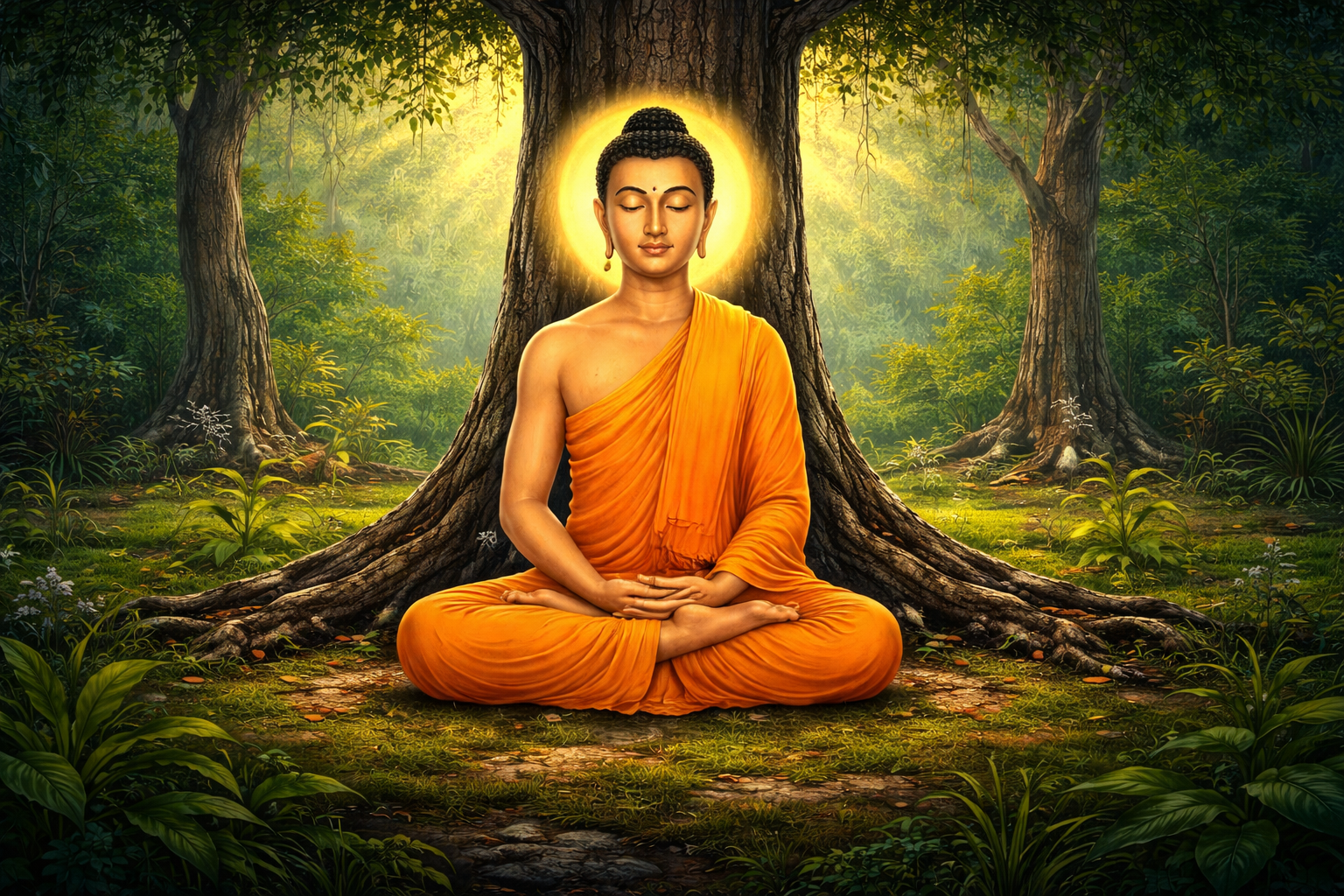
Buddha Purnima: The Festival of Inner Awakening
Along with Kurma Jayanti, this sacred day also brings Buddha Purnima the divine celebration of Lord Buddha. Across the world, Buddha’s meditation techniques are embraced as a path toward deep healing and boundless peace.
Buddha Purnima, also known as Vaishakh Purnima, is a grand festival of wisdom, compassion, and inner stillness. It marks three pivotal events in the life of Gautama Buddha his birth, his enlightenment (Bodhi), and his Mahaparinirvana (final liberation).
For this very reason, this day stands as the most significant festival in Buddhism and is celebrated globally with deep reverence.
Buddha Purnima holds immense historical significance. Lord Buddha was born in Lumbini, attained enlightenment in Bodh Gaya, delivered his first sermon in Sarnath, and attained Mahaparinirvana in Kushinagar.
This sacred day reminds us that Prince Siddhartha renounced worldly attachments, realized ultimate truth, and illuminated the path of liberation for all humanity.
Core Teachings of Buddha
Buddha’s primary teachings guide humanity toward liberation:
The Four Noble Truths
Life is full of suffering (Dukkha)
The cause of suffering is desire (Trishna)
The cessation of suffering is possible
Liberation is attained through the Noble Eightfold Path
The Noble Eightfold Path
Right View
Right Resolve
Right Speech
Right Action
Right Livelihood
Right Effort
Right Mindfulness
Right Concentration
This path brings balance, clarity, and deep peace into one’s life.
Sacred Pilgrimage Sites of Buddha
Mahabodhi Temple:
The sacred site where Buddha attained enlightenment. It is a UNESCO World Heritage Site.
Sarnath Dham:
The place where Buddha delivered his first sermon, known as Dharmachakra Pravartan.
Kushinagar Temple:
The sacred place where Buddha attained Mahaparinirvana.
Buddha Purnima Rituals and Practices
On Buddha Purnima, devotees offer prayers in temples by lighting lamps and incense. The idol of Buddha is bathed ceremonially (Abhishek). Charity and service to the poor are performed. Meditation and inner silence are practiced. Tree planting and compassion toward all living beings are encouraged.
This day carries immense spiritual significance. It calms the mind, reduces anger and attachment, and guides one toward compassion, non-violence, and self-realization.
Buddha Purnima is not just a festival, but it is a way of living. It teaches a simple yet profound truth:
True peace lies not outside, but within us.
Sacred Mantras for Buddha Purnima
ॐ मणि पद्मे हूँ
Om Mani Padme Hum
This Mahamantra symbolizes compassion, love, and purification. Chanting it brings deep mental peace.
ॐ भगवते बुद्धाय विद्महे
वज्रपाणये धीमहि
तन्नो बुद्धः प्रचोदयात्॥
Om Bhagavate Buddhaya Vidmahe
Vajrapanaye Dhimahi
Tanno Buddhah Prachodayat
Meaning:
O Buddha, bless us with wisdom and inspire our minds toward the righteous path.
ॐ सर्वे भवन्तु सुखिनः
सर्वे सन्तु निरामयाः
सर्वे भद्राणि पश्यन्तु
मा कश्चिद् दुःखभाग्भवेत्॥
Om Sarve Bhavantu Sukhinah
Sarve Santu Niramayah
Sarve Bhadrani Pashyantu
Ma Kashchid Dukhabhag Bhavet
Meaning:
May all beings be happy.
May all be free from disease.
May all see auspiciousness.
May no one suffer.
Correct Method of Chanting
Chant in the morning or on the night of the full moon. Sit in a quiet place and meditate. Chant the mantra at least 108 times. Lighting a lamp or incense enhances the spiritual atmosphere.
Benefits include: deep mental peace, removal of stress and negativity, increased concentration, and the attraction of positive energy.
Sacred Acts on This Day
On this day, worship of Lord Vishnu is highly meritorious. It is believed that Lord Vishnu resides in the Peepal tree. Offer water to the Peepal tree, light a lamp, and perform 7 or 11 circumambulations. This act is said to destroy sins and increase spiritual merit.
Charity holds great importance. Donate food grains, clothes, water, and fruits. Feed the poor, serve cows, and offer grains to birds.
Performing charity on this day brings eternal spiritual merit.
Engage in meditation and Mouna Sadhana (silence). Meditate for at least 10–15 minutes. Mentally chant “Om” or a Buddha mantra.
Avoid anger, greed, and negative thoughts. This is the true path of Buddha, the inner peace.
Follow truth and non-violence. Refrain from lies, violence, and harmful actions. Cultivate compassion for all beings.
A Day of Transformation
This day is not merely for rituals, but it is an opportunity for transformation.
Through these practices, happiness, peace, and prosperity enter life. Mental stress dissolves. Sins are purified, and spiritual merit grows. One moves forward on the path of inner evolution.
On Buddha Purnima, Hindu wisdom beautifully reminds us:
Devotion is Vishnu. Knowledge is Buddha.
And together, they create a complete and awakened life.
Even though plenty of literature is available on spiritual practices, it is highly recommended that one learn these methods under the supervision of a Guru or an expert. Everyone has unique spirituality, personality, and experiences. One solution cannot fit all.
Therefore, seeking guidance from spiritual experts is imperative to get that unique mantra, meditation, and spiritual method crafted exclusively for you for the spiritual awakening you seek. And hence, we recommend you practice these interpretations and practices mentioned above under the guidance of an expert. Please subscribe to our mailing list to stay connected and receive spiritual information. In case of any queries, please write to us at info@chamundaswamiji.com.
You can check out our YouTube channel Chamunda Swamiji where you can learn Tantra, Mantra, Yantra, and Meditation from His Holiness Shri Chamunda Swamiji. If you seek to learn Shakti Kriya, please register with us, and we will get back to you.
Post a Comment
-
Subscribe to Our Blog
-
Categories
-
Popular Articles
- Orange butterfly: Spiritual Significance
- The Dasa Mahavidyas
- Maa Bhuvaneshwari | The Dasa Mahavidyas
- The Ghosts of Ganagapur Temple, Karnataka
- Vivah Bandhan Curse – What Is It and How to Spiritually Heal It.
- Tripura Sundari | The Dasa Mahavidya
- What are Beej Mantras?
- Decoding the Maha Mrityunjay Mantra: Origin, Meaning, and Benefits
- The Five Shades of Tantra
- 9 Most Powerful Tantric Temples in India