

- Email info@ChamundaSwamiJi.com
- Call +1-516-933-7590
-
 Email
info@ChamundaSwamiJi.com
Email
info@ChamundaSwamiJi.com
-
 Call
+1-516-933-7590
Call
+1-516-933-7590


Book an Appointment
Informative
Guru Purnima 2026 Meaning, Significance, and Dates in the U.S.A.
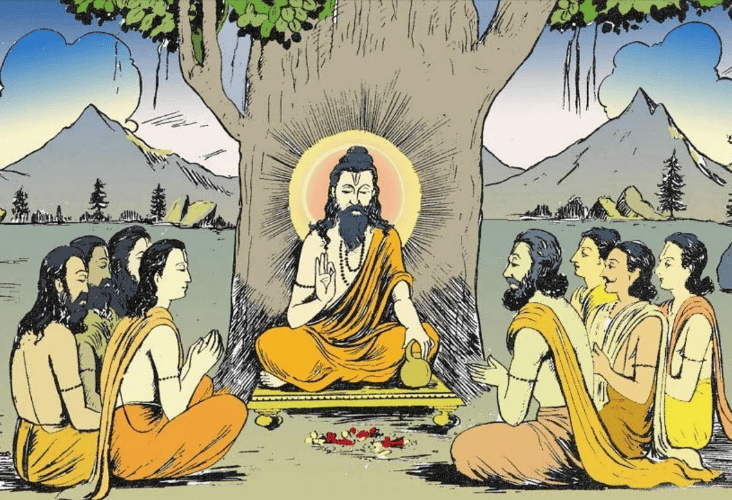
Guru Purnima is not merely a festival in the cultural sense; rather, it is regarded as a sacred day of gratitude toward knowledge, the Guru, and consciousness itself. It is observed on the full moon day (Purnima) of the month of Ashadha and holds profound significance in the Indian spiritual tradition. This day is dedicated to honoring and expressing reverence toward Gurus, Acharyas, Sadgurus, and Rishis who illuminate the path of wisdom.
Have you noticed how certain days naturally remind you to pause and reflect on your direction in life? Guru Purnima functions exactly in that way, but at a deeper spiritual level. It gently redirects awareness toward the principle of guidance itself.
This day also becomes a reminder that gratitude is not only an emotion but a spiritual practice in itself. When gratitude becomes conscious, it slowly shifts the quality of perception and inner receptivity. Guru Purnima strengthens this inner attitude of remembrance and acknowledgment.
Meaning of the Word “Guru”
The word Guru is deeply symbolic in Sanskrit tradition. “Gu” signifies darkness, and “Ru” signifies the one who dispels it. Therefore, a Guru is one who removes ignorance, fear, delusion, and spiritual darkness from life.
Such a being guides the soul toward light, clarity, and inner awakening. In this sense, Guru is not limited to a physical personality alone but represents a transformative force of consciousness.
This understanding also shifts how one relates to guidance in life. Instead of dependency, it becomes an inner alignment with clarity itself. The Guru principle begins to function as an awakening force rather than an external authority alone.
Guru Purnima 2026 Dates in the U.S.A.
In the year 2026, Guru Purnima will be celebrated on Wednesday, July 29, 2026 across most regions of the U.S.A. This date is based on the lunar calendar and the full moon of Ashadha month. The timing reminds us that spiritual observances often move in harmony with nature rather than fixed human systems.
In India, depending on regional time zones and lunar visibility, the observance may extend into July 30 in certain locations. The commencement and conclusion of the Purnima phase can slightly vary across American time zones as well. This variation itself reflects the fluidity of time in spiritual traditions.
Such variations also teach that spirituality is not rigid or mechanical. It adapts to natural rhythms rather than enforcing uniform structure. This harmony with cosmic timing is part of what gives Guru Purnima its sacred depth.
Spiritual Significance of Guru Purnima
Guru Purnima is considered a festival of the energy of knowledge itself. It is believed that on this day, subtle vibrations of consciousness and wisdom become especially active in the universal field.
According to ancient yogic traditions, spiritual practices such as sadhana, mantra chanting, and meditation become more effective during this period. A person who remembers and honors their Guru with sincerity may experience greater clarity, peace, and inner direction.
This heightened receptivity is why seekers are encouraged to slow down inwardly on this day. When the mind becomes quieter, even subtle spiritual impressions become more noticeable. Guru Purnima thus becomes an opportunity for deeper inner tuning.
Guru Purnima as Vyasa Purnima
Guru Purnima is also observed as Vyasa Purnima. Sage Ved Vyasa classified the Vedas, authored the Mahabharata, and systematized the eighteen Puranas.
Because of his immense contribution to structuring spiritual knowledge, this day is also dedicated to his remembrance. In this way, Guru Purnima becomes a celebration of the organization and transmission of sacred wisdom.
His work represents the importance of preserving wisdom in an accessible form for future generations. Without such structuring, vast knowledge would remain scattered and difficult to absorb. Vyasa symbolizes clarity brought into complexity.
Guru in Buddhist Tradition
In Buddhism, it is believed that Lord Buddha delivered his first sermon in Sarnath around this very full moon period after attaining enlightenment. This marks the beginning of his teaching journey.
Therefore, Guru Purnima also holds deep sacred importance in Buddhist tradition. It represents the moment when inner realization begins to flow outward as guidance.
This moment reflects the natural evolution of realization into expression. Inner awakening does not remain confined; it eventually becomes shared wisdom. Guru Purnima celebrates this transition from silence to teaching.
Guru in Jain Tradition
In Jainism, Lord Mahavira is believed to have imparted spiritual knowledge to his first disciple Gautam Ganadhara on this day. This event marks the beginning of structured spiritual transmission in Jain tradition.
Thus, Guru Purnima is also a symbol of reverence toward the Guru principle within Jain spiritual practice. It reflects the continuity of wisdom through disciple and teacher.
This transmission also highlights that realization becomes meaningful when it is communicated in a way that supports others. Knowledge gains depth when it is shared with clarity and compassion.
Guru Purnima in Modern America
Today, with the growth of Indian spiritual communities and yoga culture in America, the significance of Guru Purnima has expanded widely. It is observed in yoga ashrams, meditation centers, Vedanta institutes, and online spiritual communities.
Have you noticed how modern seekers still feel the need for guidance despite having unlimited information? This festival brings that need into conscious awareness. It restores the importance of direction over information.
In modern contexts, this observance also bridges cultural and spiritual understanding across continents. It becomes a shared moment of reflection for seekers from diverse backgrounds. The essence remains universal even when the form changes.
Common Celebrations and Observances
Guru Purnima celebrations typically include Guru Puja, mantra chanting, meditation sutra recitation, bhajans, kirtans, satsangs, and deep meditation sessions. Many communities also organize online spiritual gatherings for global participation.
The lighting of lamps, known as Deepdan, is also a common practice. Full moon meditation sessions are considered especially powerful on this day due to heightened lunar sensitivity.
These collective practices create a shared spiritual atmosphere. When many minds align in intention, the sense of inner stillness often becomes naturally amplified. Community energy supports individual inner focus.
Personal Expressions of Gratitude
On Guru Purnima, many people express gratitude toward teachers, parents, mentors, and spiritual guides who have influenced their lives. This expression is not only external but also internal recognition of guidance received through life.
Such remembrance naturally creates humility and openness in the heart. It helps dissolve the ego and strengthens the spirit of learning.
Gratitude expressed consciously also transforms memory into spiritual awareness. It turns past experiences into sources of insight rather than emotional residue. This shift deepens emotional maturity.
Special Practices for Guru Purnima
One important practice is remembering your Guru or spiritual guide with sincerity and gratitude. Even if the Guru is not physically present, inner remembrance carries deep significance.
Meditation and silent practice are especially powerful on the night of the full moon. The lunar energy is believed to make the mind more sensitive, receptive, and reflective during this time.
This sensitivity can be used for deeper self-observation. When awareness increases, subtle patterns of thought and emotion become easier to recognize. This recognition itself becomes a doorway to inner growth.
Mantra Chanting on Guru Purnima
Mantra chanting is widely practiced on Guru Purnima as a form of spiritual alignment. Common mantras include “Om Gurave Namah,” “Shri Ram Jai Ram Jai Jai Ram,” and “Om Namah Shivaya.”
Individuals may also chant their personal Guru Mantra if they have received initiation. The focus is not only repetition but inner connection and awareness.
When chanting is done with attention, the sound becomes less mechanical and more meditative. The mantra then begins functioning as a bridge between mind and deeper consciousness. This is where its real effect begins to unfold.
Seeking Knowledge on This Day
Engaging with spiritual knowledge is considered highly auspicious on Guru Purnima. Reading scriptures, listening to satsangs, and reflecting on life direction are important practices.
Have you noticed how understanding deepens when learning is combined with reflection? This day encourages exactly that kind of inward learning process.
Knowledge absorbed in a calm state tends to stay longer in memory. It also integrates more deeply into behavior and perception. Guru Purnima supports this kind of conscious assimilation.
Charity and Service
Acts of charity such as donating food, books, or helping those in need are considered highly meritorious on Guru Purnima. Service is seen as an expression of gratitude in action.
Such acts also help dissolve ego-based attachment and strengthen compassion within the individual. Spiritual growth is considered incomplete without service.
Service also shifts awareness from self-centered thinking to shared existence. This expansion of perspective is considered an essential part of spiritual maturity. Giving becomes a form of inner purification.
Guru Purnima and Lunar Energy
The full moon has a strong influence on the human mind and emotions according to yogic science. On Guru Purnima, this lunar influence is believed to intensify mental sensitivity.
Meditation becomes deeper, intuition may become clearer, and emotional purification becomes more possible. However, this same sensitivity also requires inner stability to remain balanced.
This is why grounding practices are emphasized alongside meditation. Without stability, heightened sensitivity can feel overwhelming rather than enlightening. Balance becomes the key factor.
Guru Beyond the Human Form
In modern understanding, the role of Guru is not limited to ashrams or spiritual institutions. Parents, teachers, life experiences, challenges, and even inner reflection can function as Gurus.
Have you noticed how sometimes life itself teaches the deepest lessons without any external teacher? This reflects the expanding understanding of the Guru principle.
This broader view helps dissolve rigid definitions of guidance. It allows life itself to become a continuous learning process. Every experience begins to hold potential meaning.
Guru as Inner Awareness
Indian philosophy describes three levels of Guru: the external Guru who guides, the scriptural Guru who provides knowledge, and the inner Guru which is consciousness itself.
This inner Guru helps a person distinguish between right and wrong from within. Over time, external guidance leads one toward this inner clarity.
When this inner clarity strengthens, decision-making becomes more intuitive. Dependence on external validation slowly reduces. Inner awareness becomes the primary guide.
Conditions for Receiving Guidance
The guidance of a Guru becomes truly beneficial when the mind is steady and discipline is established in life. Compassion, balance, and the desire for truth must also be present.
Without inner readiness, even the highest guidance may not be fully absorbed. Spiritual maturity develops gradually through practice and reflection.
Readiness is not a fixed state but a developing condition. It grows through consistency in awareness and behavior. This gradual refinement prepares the mind for deeper understanding.
Ultimate Purpose of the Guru
The ultimate purpose of a Guru is to lead the disciple toward self-realization. This means helping a person recognize their own true nature beyond confusion and illusion.
Guru Purnima is especially significant because it honors the Guru principle itself. It is a reminder that light is always available, but inner readiness is required to receive it.
Self-recognition is not an external achievement but an inner unveiling. It happens when unnecessary identification begins to fall away. The Guru supports this inner unfolding.
Guru as Light from Darkness
In Indian philosophy, the Guru is seen as the force that transforms darkness into light. This darkness is not external but internal ignorance and confusion.
On this day, individuals honor all forms of guidance received in life. This includes mentors, parents, teachers, and any source of inspiration.
When this recognition becomes sincere, it naturally reduces arrogance and increases humility. The mind becomes more open to learning. This openness is considered essential for growth.
Spiritual Energy of Guru Purnima
Guru Purnima is considered a spiritually charged period from both astrological and yogic perspectives. The full moon of Ashadha is believed to intensify receptivity in the mind.
During this time, sadhana, mantra chanting, and reflection are absorbed more deeply. Many seekers also take vows such as mantra initiation, meditation practice, or silence.
This heightened period encourages deeper inward focus. It becomes easier to observe thoughts and emotions with clarity. Inner observation becomes more natural.
Jupiter and Astrological Significance
From an astrological perspective, Guru represents the planet Jupiter, known as Guru Graha. Jupiter symbolizes wisdom, expansion, and higher knowledge.
Practices such as worship of Lord Vishnu, offering yellow items, and honoring teachers or Brahmins are considered spiritually beneficial on this day. These actions are believed to align one with Jupiter’s positive influence.
This symbolic connection links cosmic principles with human spiritual practice. Astrology here functions as a language of symbolic alignment. It encourages harmony between inner and outer forces.
Final Spiritual Essence of Guru Purnima
At its deepest level, Guru Purnima teaches that the greatest darkness in life is lack of direction. The Guru is the force that awakens clarity and inner illumination.
Have you noticed how life feels different when clarity is present even in small decisions? That clarity itself is the real blessing of the Guru principle.
Guru Purnima ultimately reminds us that true growth is not only external achievement, but inner awakening from confusion into awareness.
This awakening does not happen all at once but gradually becomes part of daily perception. Over time, clarity begins shaping not just decisions but the entire experience of life itself.
Even though plenty of literature is available on spiritual practices, it is highly recommended that one learn these methods under the supervision of a Guru or an expert. Everyone has unique spirituality, personality, and experiences. One solution cannot fit all.
Therefore, seeking guidance from spiritual experts is imperative to get that unique mantra, meditation, and spiritual method crafted exclusively for you for the spiritual awakening you seek. And hence, we recommend you practice these interpretations and practices mentioned above under the guidance of an expert. Please subscribe to our mailing list to stay connected and receive spiritual information. In case of any queries, please write to us at info@chamundaswamiji.com.
You can check out our YouTube channel Chamunda Swamiji where you can learn Tantra, Mantra, Yantra, and Meditation from His Holiness Shri Chamunda Swamiji. If you seek to learn Shakti Kriya, please register with us, and we will get back to you.
Post a Comment
-
Subscribe to Our Blog
-
Categories
-
Popular Articles
- Orange butterfly: Spiritual Significance
- The Dasa Mahavidyas
- Maa Bhuvaneshwari | The Dasa Mahavidyas
- The Ghosts of Ganagapur Temple, Karnataka
- Vivah Bandhan Curse – What Is It and How to Spiritually Heal It.
- Tripura Sundari | The Dasa Mahavidya
- What are Beej Mantras?
- Decoding the Maha Mrityunjay Mantra: Origin, Meaning, and Benefits
- The Five Shades of Tantra
- 9 Most Powerful Tantric Temples in India