

- Email info@ChamundaSwamiJi.com
- Call +1-516-933-7590
-
 Email
info@ChamundaSwamiJi.com
Email
info@ChamundaSwamiJi.com
-
 Call
+1-516-933-7590
Call
+1-516-933-7590


Book an Appointment
Informative
Why Gupt Navratri Pulls You Toward One Specific Mantra Again and Again
Out of hundreds of mantras, one keeps returning to you.
You hear another chant, yet the mind drifts back to the same few syllables.
Even when you try a new practice, the old mantra waits like a familiar doorway.
It does not shout, it simply remains.
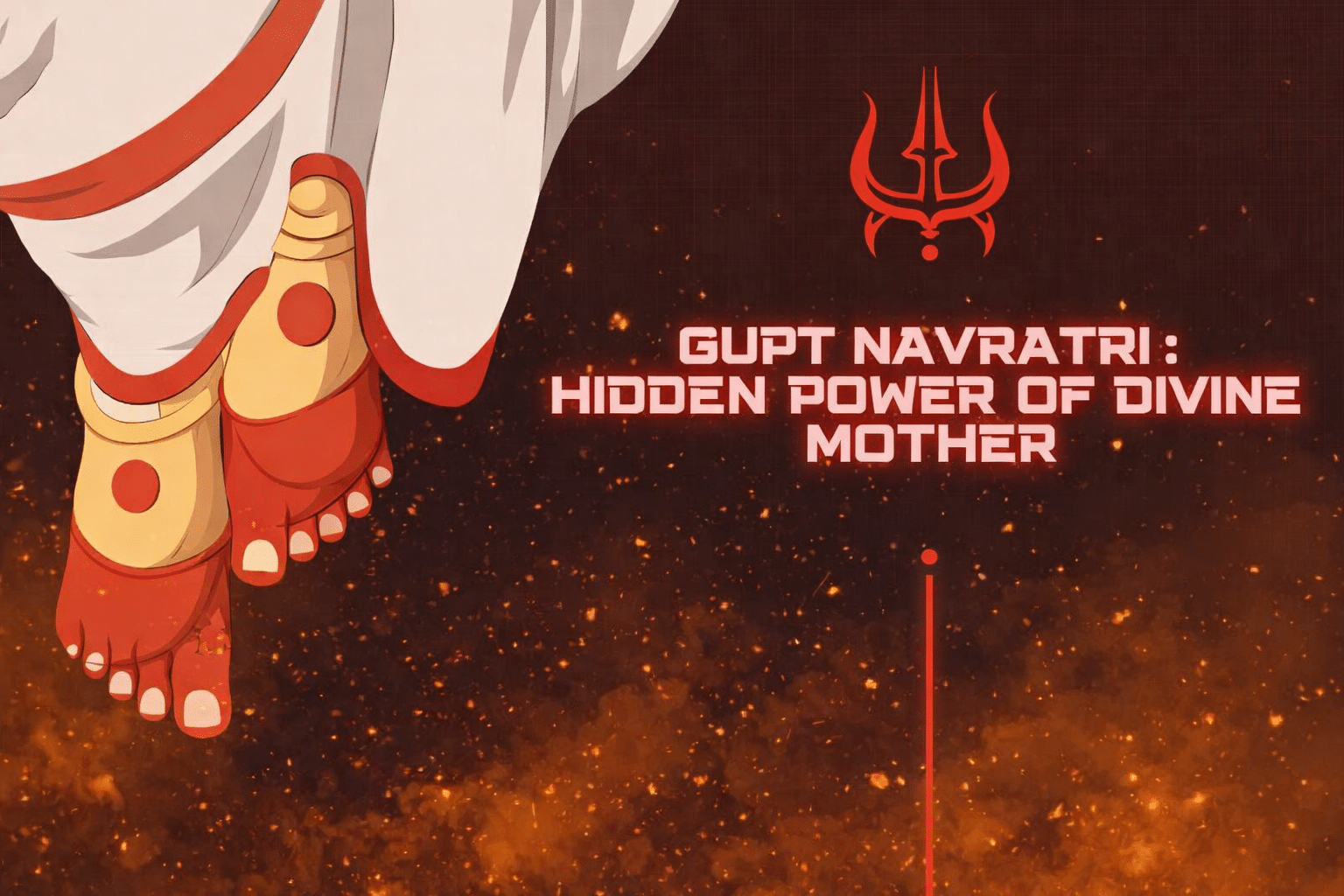
During Magha Gupt Navratri 2026, this pull often becomes stronger. People report that a particular name of the Devi follows them into dreams, bus rides, random videos, and silent moments before sleep. You begin to wonder whether you chose the mantra or the mantra quietly chose you.
Settling the Anxiety Around It
The mind quickly creates stories. Maybe I am stuck. Maybe I am doing something wrong. Maybe I should experiment with more powerful chants. Yet attraction to one mantra is not a limitation. In the yogic view, it is a form of recognition.
Just as certain people feel immediately familiar, certain sounds also carry an old intimacy. Gupt Navratri is considered a season when hidden tendencies surface. The heart remembers languages it spoke long before this lifetime’s personality was formed.
Questioning the Popular Explanations
Modern spirituality gives two simple answers. The first says it is only psychological conditioning. The second says it is blind faith. Both reduce the mystery to something small and manageable.
Tantra offers a more unsettling possibility. A mantra is not merely a sentence; it is a living current of consciousness. Repeated attraction may indicate unfinished dialogue between your inner nature and that particular Devi. This idea disturbs the rational mind because it suggests relationship, not technique.
Three Possible Roots of the Pull
One possibility is samskara, an imprint carried across lives. Just as a child shows unlearned talent, the soul may remember a sound it once practiced deeply. The mantra feels less like learning and more like returning home after travel.
Another root can be the call of the ishta, the chosen form of the Divine who guides your present journey. The ishta often selects the seeker before the seeker becomes aware. The attraction then is not obsession but invitation.
A third source can be purely psychological. The mind sometimes clings to a mantra because it once gave comfort during pain. Repetition then becomes habit, not awakening. Distinguishing these layers requires honesty.
During Magha Gupt Navratri, the veil between these layers thins. People suddenly feel drawn to Kali’s bija, or to the gentle rhythm of Lalita, or to the protective syllables of Tara without any external teaching. The Devi uses the season to highlight unfinished conversations.
How the Body Confirms the Truth
Tantra says the body never lies about a mantra. When the connection is authentic, breath becomes softer without effort. The spine subtly lengthens. Thoughts may continue, yet a background stillness appears.
If the pull is only mental obsession, chanting creates agitation. The jaw tightens, the rhythm feels forced, and silence afterwards feels empty. These signs are more reliable than philosophical debates.
The Role of Gupt Navratri Energy
Gupt Navratri is not loud celebration. It is inward chemistry. Ancient teachers observed that during this period dormant mantras wake up the way seeds respond to hidden rain. That is why even people who rarely practice suddenly feel devotional restlessness.
The Devi chooses subtle methods. She may place the mantra in a stranger’s ringtone, in a temple you passed by accident, in a line from an old book. None of this is dramatic, yet it rearranges the inner compass.
A Small Glimpse from the Upanishadic View
The Upanishads describe sound as the bridge between form and formlessness. A mantra is therefore not information but direction. Repeated attraction suggests that your inner movement currently requires that specific direction, not another.
Forcing a different path out of curiosity can be like changing medicines because the bottle looks prettier.
PERSONAL MIRROR Listening Without Romance
Before concluding anything mystical, ask yourself gently.
-When did this mantra first enter your life?
-Was it during a crisis, a meeting with a teacher, or an unexplained moment of peace?
-After chanting, do you feel simpler or more complicated?
-Are you attracted to the sound or to the idea of being spiritual?
These questions protect you from both superstition and cynicism.
The Difference Between Calling and Obsession
Calling makes you more spacious. Obsession makes you narrower. Calling slowly improves daily conduct. Obsession only increases imagination about results.
In a true connection, the mantra influences how you speak to your family, how you handle anger, how you meet disappointment. If none of this changes, the relationship may still be at the surface.
One Grounded Practice for This Phase
During the remaining days of Magha Gupt Navratri 2026, try a single, uncomplicated experiment.
Chant the chosen mantra for five minutes without counting, without expectation. Immediately after, sit for two minutes in silence and observe the aftertaste in the body. Do not judge the experience as good or bad.
Repeat this for seven days only. If the attraction deepens with calmness, continue. If restlessness grows, pause without guilt. Discernment is part of devotion.
Avoid collecting many new mantras during this period. Tantra compares that habit to planting ten seeds in one small pot.
The Place of Guru and Guidance
Traditions emphasize the role of a living guide because the mind can easily misread inner signals. A guru does not own your mantra; the guru helps you meet it safely. Without such anchoring, enthusiasm can become fantasy.
HH Shri Chamunda Swamiji often reminds seekers that a mantra ripens through sincerity, not through quantity. The Devi values steadiness more than excitement.
Trusting the Quiet Thread
If one mantra keeps returning to you, do not rush to label it miracle or delusion. Treat it as a quiet guest at the door of your awareness. Open the door slowly. Sit with the visitor before asking for gifts.
Gupt Navratri teaches that the Divine speaks softly to those who are not in a hurry to prove anything. Whether the pull comes from past-life memory, the call of the ishta, or simple psychological need, patience will reveal its face.
Walk with the sound a little longer.
Let the mantra show you who you are becoming.
Jai Mata Di!
Even though plenty of literature is available on spiritual practices, it is highly recommended that one learn these methods under the supervision of a Guru or an expert. Everyone has unique spirituality, personality, and experiences. One solution cannot fit all.
Therefore, seeking guidance from spiritual experts is imperative to get that unique mantra, meditation, and spiritual method crafted exclusively for you for the spiritual awakening you seek. And hence, we recommend you practice these interpretations and practices mentioned above under the guidance of an expert. Please subscribe to our mailing list to stay connected and receive spiritual information. In case of any queries, please write to us at info@chamundaswamiji.com.
You can check out our YouTube channel Chamunda Swamiji where you can learn Tantra, Mantra, Yantra, and Meditation from His Holiness Shri Chamunda Swamiji. If you seek to learn Shakti Kriya, please register with us, and we will get back to you.
Blessings from His Holiness Shri Chamunda Swami Ji.
Post a Comment
-
Subscribe to Our Blog
-
Categories
-
Popular Articles
- Dead moth in the house. What universe is trying to tell you?
- Spiritual Meaning of Moth
- The Dasa Mahavidyas
- Orange butterfly: Spiritual Significance
- Vivah Bandhan Curse – What Is It and How to Spiritually Heal It.
- Maa Bhuvaneshwari | The Dasa Mahavidyas
- Tripura Sundari | The Dasa Mahavidya
- What are Beej Mantras?
- The Ghosts of Ganagapur Temple, Karnataka
- Spiritual Meaning of Ant in Your Home.