

- Email info@ChamundaSwamiJi.com
- Call +1-516-933-7590
-
 Email
info@ChamundaSwamiJi.com
Email
info@ChamundaSwamiJi.com
-
 Call
+1-516-933-7590
Call
+1-516-933-7590


Book an Appointment
Hindu Rituals
Importance of Yantra in Spirituality
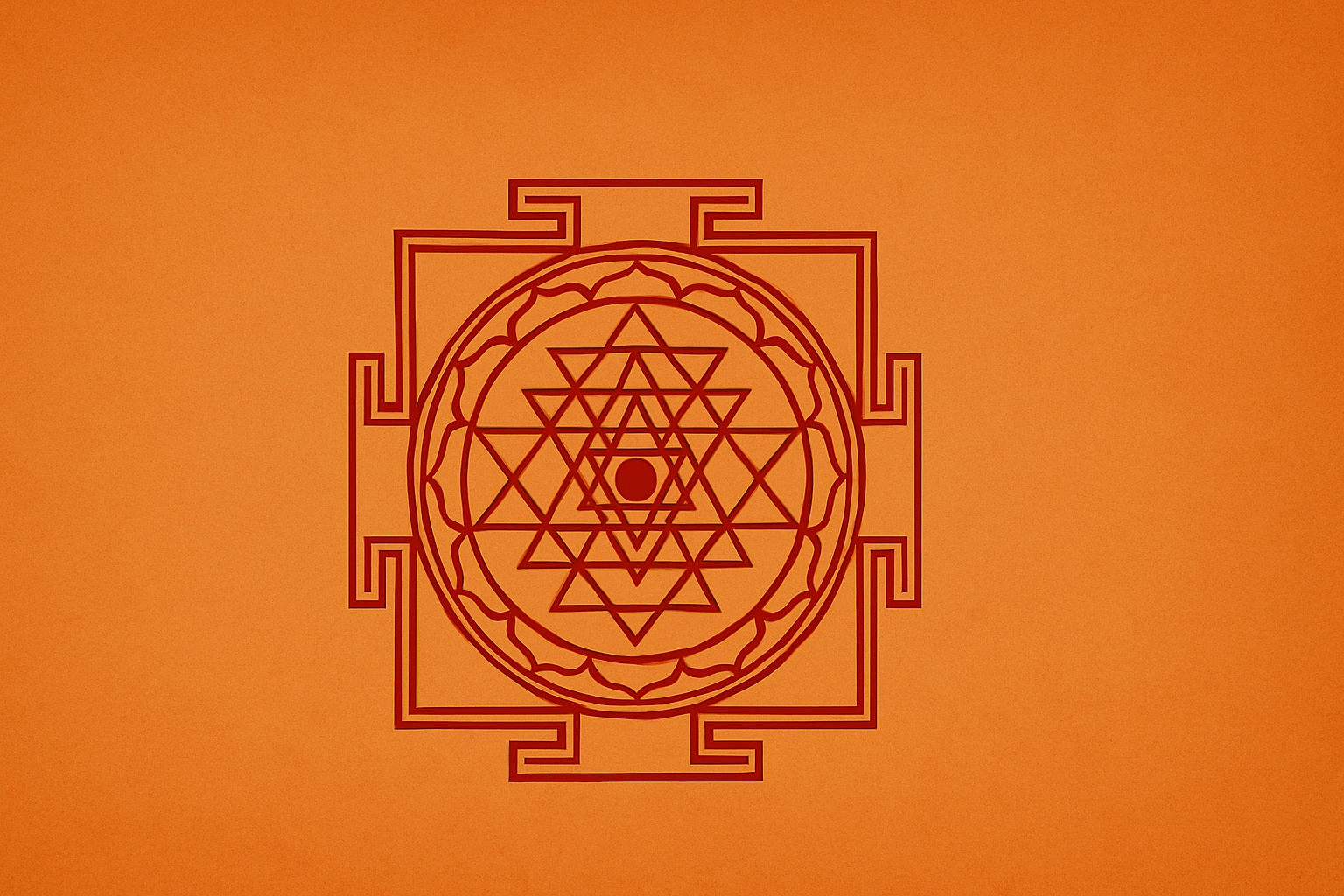
Importance of Yantra in Spirituality: Our ancient Shastras and Tantras have extensively revealed the profound powers embedded in Yantras—geometric mystical diagrams designed to harness divine energies. Yantras are not mere drawings; they are potent Tantric yantras considered as Sakti itself, the embodiment of cosmic power. It is said in spiritual traditions that there is no essential difference between a Yantra and Ishwara or God. When a Murti or idol is unavailable, worshipping a Yantra as your Ishta Devata or personal deity is deemed the highest form of devotion.
In many traditions, Yantra worship is equated with worshipping Lord Vishnu, one of the principal Trimurti gods governing sustenance and cosmic order or Dharma. Through the ritualistic worship of Yantras, one gains control over the five Kleshas or afflictions—lust or Kama, anger or Krodha, greed or Lobha, attachment or Moha, and ego or Ahankara, thus purifying the Chitta or mind-stuff.
The Divine Power and Glory of Yantra
The Vedic and Tantric wisdom assert that divine entities or Devatas reside within Yantras. Therefore, a Yantra is considered a sacred abode of the gods or Devalaya. The power of Yantra worship is immediate because Yantras act as direct channels for cosmic energy or Prana and divine blessings or Anugraha.
For instance, in Gujarat, the Gayatri Yantra is reverently placed in the temple of Shri Bahuchara Mata, and the Bisa Yantra adorns the temple of Ambamata. These Yantras are not merely decorative; their worship activates powerful cosmic forces through focused Sadhana or spiritual practice.
The Metaphysics of Yantra: From Bindu to Triangle
The foundation of all Indian metaphysical thought begins with the Bindu—the primordial point or seed. In Tantra and Vedic philosophy, the Bindu symbolizes the origin of the universe, the seed from which all creation manifests.
From this Bindu emerges the sacred Triangle or Trikona, representing the triad of Jnana or knowledge, Karma or action, and Iccha or desire or will. This triangle is fundamental in shaping the universe and the structure of Yantras.
The Shloka from the Isha Upanishad beautifully encapsulates this cosmic completeness:
पूर्णमदः पूर्णमिदं पूर्णात् पूर्णमुदच्यते।
पूर्णस्य पूर्णमादाय पूर्णमेवावशिष्यते॥
Poornamadah Poornamidam Poornat Poornamudchyate
Poornasya Poornamadayah Purnamevaavashishyate
It means from completeness or zero or Bindu arises creation, and into completeness all dissolves. The Yantra, created from the Bindu, symbolizes this cosmic cycle of creation, sustenance, and dissolution.
Types of Yantras and Their Spiritual Significance
Yantras appear in various shapes and forms, each aligning with different deities and cosmic forces. Their geometric configurations establish energetic links to specific gods and universal powers.
The Five Principal Yantra Types
Bhu Prishtha Yantra or Earth-facing
Meru Prishtha Yantra or Mountain-shaped
Patal Yantra or Netherworld-associated
Meruprishta Ar Yantra
Kurma Prishtha Yantra or Tortoise-shaped
These forms correspond to different layers of Prithvi or Earth, Akasha or space, and cosmic elements influencing the subtle energies in our environment.
Elemental Yantras and Their Effects
There are also Pancha Bhuta Yantras representing the five cosmic elements—Earth or Prithvi, Water or Jala, Fire or Agni, Air or Vayu, and Ether or Akasha. Each Yantra works with these elements to balance and enhance specific energies.
Yantras from Classical Tantra and Astrology
Classical Tantric experiments classify Yantras into seven main types, each with unique vibrational effects. Additionally, according to Vedic astrology or Jyotisha, there are ten types of Yantras classified by their functions:
Beej Yantra or Seed power
Pran Yantra or Life force
Shakti Yantra or Energy power
Drishti Yantra or Protection against evil eye
Vashyaadi Yantra or Control and attraction
Mantra Yantra
Yantra-Gayatri or Yantra empowered with Gayatri mantra
Pranasthapana Yantra or Establishing life energies
Bhootbeech Yantra or Elemental forces
Digpal Yantra or Guardians of directions
Among these, Satvik Yantras are considered most pure and spiritually potent, with long-lasting effects on the devotee’s energy field or Aura.
Popular Yantras and Their Uses
The Bisa Yantra is famed in Tantra for cultivating Abhaya or fearlessness and success in endeavors due to its auspicious energy or Mangala. Worshipping planetary Yantras or Graha Yantras with sincere devotion is crucial in Vedic astrology for pacifying malefic planetary influences or Doshas, thus improving one’s Karma and Bhagya or destiny.
Rituals, Mantras, and Guru’s Role in Yantra Sadhana
Before commencing Yantra worship, reciting the Kavach or protective hymn of the relevant Devatas invokes divine protection. One common powerful protective Kavach mantra is the Gayatri Kavach:
ॐ भूर्भुवः स्वः तत्सवितुर्वरेण्यं।
भर्गो देवस्य धीमहि धियो यो नः प्रचोदयात्॥
Om Bhur Bhuvah Swah Tatsavitur Varenyam
Bhargo Devasya Dheemahi Dhiyo Yo Nah Prachodayat
Additionally, the prescribed Japa Mantras corresponding to each Yantra must be chanted with strict adherence to Tantric and Mantra Vidhi or ritual procedure for activating the Yantra’s power.
It is highly recommended that Yantras be made and worshipped under the guidance of a qualified Guru who understands the intricate principles of Tantra and Vedic astrology. A Guru ensures that the Yantra is energized properly or Prana Pratishtha and that the devotee undertakes the Sadhana with the right intention, purity, and discipline.
Post a Comment
-
Subscribe to Our Blog
-
Categories
-
Popular Articles
- Dead moth in the house. What universe is trying to tell you?
- Spiritual Meaning of Moth
- The Dasa Mahavidyas
- Orange butterfly: Spiritual Significance
- Vivah Bandhan Curse – What Is It and How to Spiritually Heal It.
- Maa Bhuvaneshwari | The Dasa Mahavidyas
- Tripura Sundari | The Dasa Mahavidya
- What are Beej Mantras?
- The Ghosts of Ganagapur Temple, Karnataka
- Spiritual Meaning of Ant in Your Home.