

- Email info@ChamundaSwamiJi.com
- Call +1-516-933-7590
-
 Email
info@ChamundaSwamiJi.com
Email
info@ChamundaSwamiJi.com
-
 Call
+1-516-933-7590
Call
+1-516-933-7590


Book an Appointment
Informative
Magha Gupt Navratri: Why the Divine Feminine Is Worshipped in Silence
In today’s world, spirituality has become loud and performative. Festivals are announced weeks in advance, decorations are meticulously planned, and social feeds overflow with curated devotion. Even prayer often becomes a performance.
Against this backdrop of noise, Magha Gupt Navratri arrives almost unnoticed. It is quiet, understated, and easy to miss. Yet, this hiddenness is deliberate, because the purpose of this Navratri is not outward celebration it is inward turning.
Magha Gupt Navratri is not meant to draw attention. It is meant to be entered silently, to be experienced in solitude. The word Gupt means hidden or veiled, and this secrecy is intentional. During the Magha month, nature itself is still. The energy of the season favors contraction, reflection, and subtle awareness. This Navratri mirrors that energy, asking the practitioner to turn inward, to slow down, and to cultivate presence.
The Hidden Nature of Magha Gupt Navratri
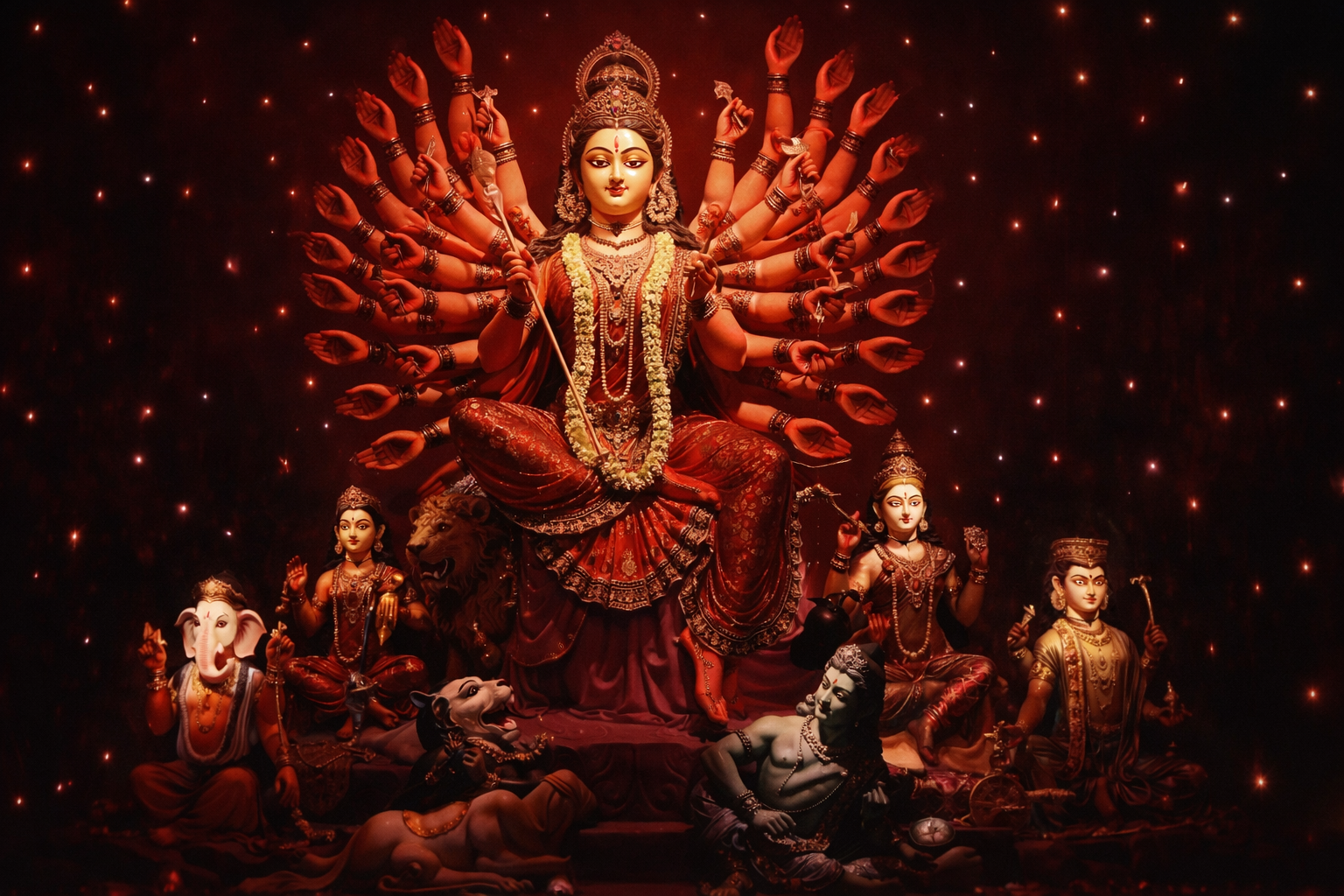
The Divine Feminine during this Navratri does not appear as the mother who smiles and comforts. She appears as a private force, raw and observant. She is not here to give boons or to entertain devotion; she is here to remove illusions and awaken consciousness. Silence is her language, and stillness is her form. She asks you to meet her quietly, without distraction or display, because only in stillness can her full presence be felt.
Silence in Tantra is not emptiness. It is power concentrated. Modern minds often mistake silence for weakness, but in reality, silence gathers energy, preserves it, and allows transformation to occur. Speech, reaction, and constant activity scatter prana, but restraint creates inner heat. This contained energy becomes a tool for awakening, a form of tapasya that transforms the practitioner without struggle or external show.
Secrecy as a Sacred Practice
Secrecy in Tantric practice is often misunderstood, but it is not about exclusion it is about protection. Certain energies intensify when exposed prematurely to the outer world. When spiritual practice is observed or performed for validation, its potency diminishes.
Magha Gupt Navratri preserves the sacredness of these energies. By remaining veiled, it allows the practitioner to work with the unconscious layers of the psyche, where true transformation begins.
Unlike other festivals, Magha Gupt Navratri is not about outward celebration. Celebration disperses energy, strengthens identity, and distracts the mind. This Navratri contracts energy, dissolves habitual patterns, and confronts the practitioner with their inner truth. It is designed for those who are spiritually exhausted, overstimulated, or disillusioned with performative devotion. It asks you to face yourself honestly, without distraction, without the need to impress.
Tapasya Over Bhakti
Tapasya takes precedence over bhakti during this period. While bhakti often emphasizes emotion, surrender, and outward expression, Magha Gupt Navratri emphasizes restraint, discipline, and careful observation. The practitioner is asked to watch thoughts, urges, and emotional patterns without indulgence.
This watching is not passive it is active awareness, a deliberate engagement with the self that refines consciousness quietly but powerfully.
Introverts and contemplative minds naturally resonate with this Navratri. It honors the inclination to withdraw, to protect one’s energy, and to find depth in solitude. For once, silence and stillness are not shortcomings they are the very tools of practice. Magha Gupt Navratri validates these tendencies, showing that withdrawal and reflection are not avoidance but essential spiritual strategies for inner growth.
A Reset for the Modern Mind
For the modern mind, which is constantly bombarded with stimulation and information, this Navratri acts as a reset. There are no elaborate rituals, no social obligations, and no performance requirements.
The real work is in what you refrain from: not reacting to impulses, not over-engaging with the external world, and not seeking validation. This restraint allows the nervous system and mind to descend into clarity, creating space for subtle insights and inner alignment.
During this Navratri, the Devi is experienced as an inner authority. She does not respond to outward praise or external devotion. She watches your sincerity, your stillness, and your honesty. There is no external audience, no collective energy to lean on only the practitioner’s engagement with their own consciousness. Magha Gupt Navratri asks whether you can sit with yourself fully, without distraction, without escape, and without pretense.
Delayed but Deep Transformation
The results of this inward practice are subtle and often delayed. Unlike more visible spiritual experiences, the effects of Magha Gupt Navratri manifest quietly, over time. Emotional clarity may appear unexpectedly, old habits may dissolve without conscious effort, and decisions may become obvious without struggle. This delayed unfolding ensures that transformation is integrated, stable, and lasting, rather than performative or temporary.
Magha Gupt Navratri is not for drama or spectacle. It is for those who are done with superficial spiritual experiences, who are ready to face truth without excitement, and who seek honesty over sensation.
This Navratri does not make the practitioner feel special; it makes them accountable to themselves, fostering integrity and inner courage.
Silence as Devotion
Silence during this Navratri is a form of devotion itself to the universe.
When you refrain from unnecessary speech, from distraction, and from indulgence, you are not withdrawing from the Divine you are meeting Her at the level She chooses. Presence, not ritual or spectacle, becomes the offering. The Devi’s attention is drawn to those who show up sincerely, quietly, and fully in their awareness.
Swamiji’s Reflection
H.H. Shri Chamunda Swamiji says, Magha Gupt Navratri is not hidden because it is insignificant or lesser in importance. On the contrary, it is veiled because it is deeply intimate, meant to touch the subtle layers of your consciousness. Its power lies in the quiet, the unobserved, and the inward turn of attention that it encourages.
This Navratri is not designed for crowds, for spectacle, or for public celebration. It asks for courage the kind of courage that does not need applause or acknowledgment. It is the courage to face your inner world honestly, to sit with your mind and your emotions without distraction or performance.
And this courage is not about action in the conventional sense. It is about the strength to remain still, to resist the urge to react, to refrain from seeking comfort or escape. Stillness itself becomes a practice, a vessel in which energy gathers and transforms.
If you feel a subtle pull toward this Navratri, trust it. The practice does not demand effort, elaborate rituals, or grand gestures. It only demands sincerity the willingness to show up for yourself in honesty and awareness.
Sit more. Speak less. Observe deeply. These are not just instructions; they are invitations into a sacred rhythm. The Divine Feminine is not absent from your life during this time. She is present, attentive, and fully aware of every nuance of your being.
In silence, She works fastest. Without words, without ceremony, without distraction, She moves through the layers of your consciousness. She activates, heals, and aligns what is ready, leaving nothing unresolved. And in this quiet, intimate space, you are truly seen.
Jai Mata Di!
Even though plenty of literature is available on spiritual practices, it is highly recommended that one learn these methods under the supervision of a Guru or an expert. Everyone has unique spirituality, personality, and experiences. One solution cannot fit all.
Therefore, seeking guidance from spiritual experts is imperative to get that unique mantra, meditation, and spiritual method crafted exclusively for you for the spiritual awakening you seek. And hence, we recommend you practice these interpretations and practices mentioned above under the guidance of an expert. Please subscribe to our mailing list to stay connected and receive spiritual information. In case of any queries, please write to us at info@chamundaswamiji.com.
You can check out our YouTube channel Chamunda Swamiji where you can learn Tantra, Mantra, Yantra, and Meditation from His Holiness Shri Chamunda Swamiji. If you seek to learn Shakti Kriya, please register with us, and we will get back to you.
Post a Comment
-
Subscribe to Our Blog
-
Categories
-
Popular Articles
- Dead moth in the house. What universe is trying to tell you?
- Spiritual Meaning of Moth
- The Dasa Mahavidyas
- Orange butterfly: Spiritual Significance
- Vivah Bandhan Curse – What Is It and How to Spiritually Heal It.
- Maa Bhuvaneshwari | The Dasa Mahavidyas
- Tripura Sundari | The Dasa Mahavidya
- What are Beej Mantras?
- The Ghosts of Ganagapur Temple, Karnataka
- Spiritual Meaning of Ant in Your Home.