

- Email info@ChamundaSwamiJi.com
- Call +1-516-933-7590
-
 Email
info@ChamundaSwamiJi.com
Email
info@ChamundaSwamiJi.com
-
 Call
+1-516-933-7590
Call
+1-516-933-7590


Book an Appointment
Informative
Siddha Yogis and the Nagapanth: Two Mystical Currents of Indian Tantra and Yoga
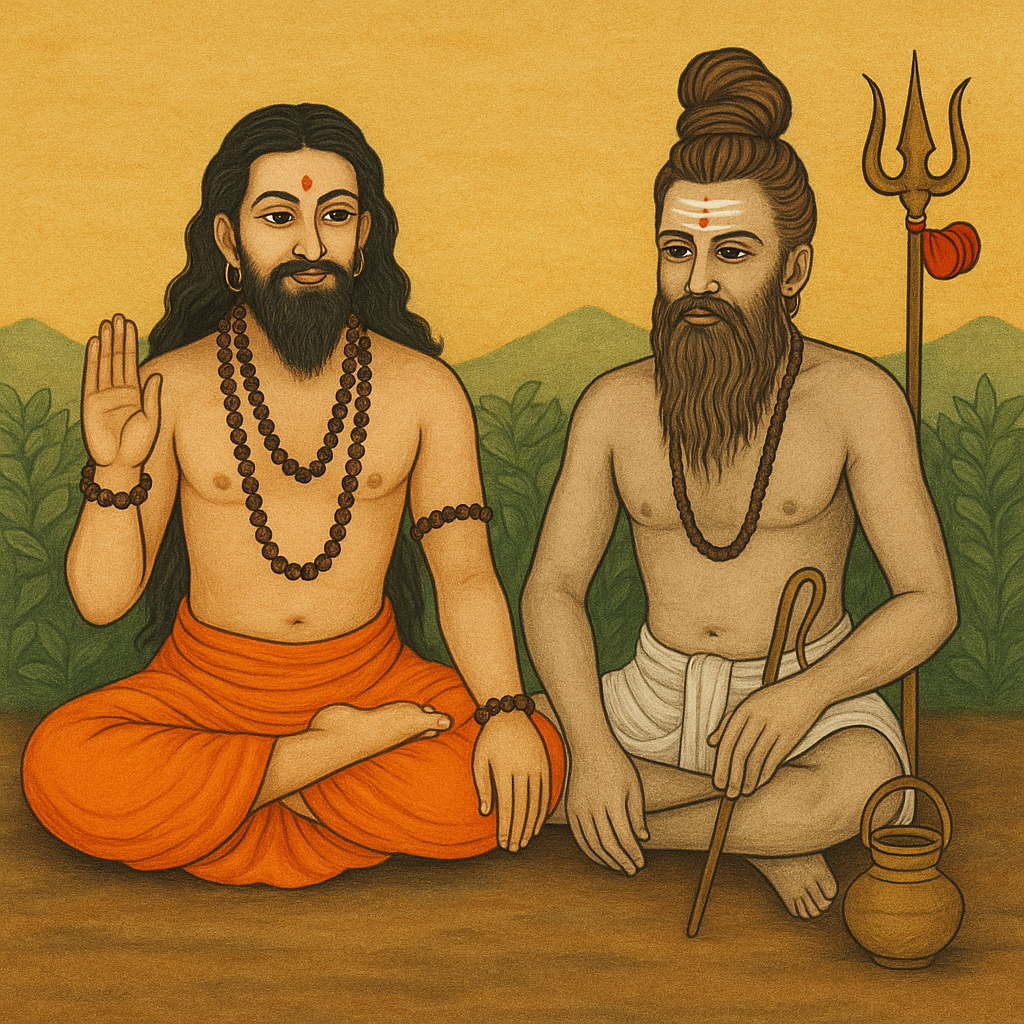
Siddha Yogis and the Naga Panth: The spiritual landscape of India has always been dynamic rich with yogis, sadhaks, tantriks, and renunciants exploring different dimensions of truth. Among these, two powerful traditions emerged with distinct worldviews yet a shared goal of inner liberation: the Siddha Yogis and the Naga Panth.
Both are ancient, deeply rooted in Tantra, Yoga, and non-dual Shaiva thought, but their expressions diverged with time. To understand their origin, philosophy, and spiritual practices is to glimpse into a vast heritage of inner transformation, mystical power, and renunciation.
Who Are Siddha Yogis?
The word Siddha means perfected one. A Siddha Yogi is one who has achieved inner siddhi not through belief alone, but through deep sadhana, mantra, kundalini awakening, and tantric realization. Historical records place them as early as the 8th century, arising mainly within the fold of Vajrayana Buddhism, also known as the Diamond Path or Mantrayana.
As Vajrayana spread from India to Bengal, Nepal, and Tibet, Siddha Yogis evolved in their own direction. In Tibet, the suffix “pa” was added to the names of these yogis thus we hear names like Gorakshapa or Meenapa. A total of 84 Siddhas are celebrated, each associated with a unique yogic or tantric accomplishment.
Over time, Shaiva Tantra began influencing these Vajrayani traditions. The Mahayana Mantrayana slowly merged mantra, yoga, and internal tantra into a new stream now recognized as Siddha Yoga.
Siddha Yogis: Beyond Ritual, Into Inner Awakening
Siddha Yogis rejected empty rituals, caste hierarchy, external dogmas, and even idol worship. To them, the Sahasrara chakra and Kundalini Shakti were the gateways to Shiva. They taught introverted sadhana a life rooted in inner realization rather than social formality.
They even questioned the authority of the Vedas, caste-based rules, and dualistic concepts of Brahma and Ishwar, seeing these as distractions from the path of direct experience.
Women were seen not as obstacles but as Yoginis spiritual partners in Maha Mudra Tantra. Many Siddhas viewed sexual union as a doorway to samadhi, though this became a controversial aspect over time.
The Guru in Siddha Yoga
Despite their radical approach, Siddha Yogis placed supreme importance on the Guru. According to their teachings, no mantra, no yoga, no tantra yields fruit without the grace of a living Guru. The bondage of Maya could be cut only by Guru Vakya the living word of the realized master.
In their poetry and spiritual songs, Siddha Yogis often mention the Guru as both the beginning and the end of the path. He is the fire that burns ignorance and the mirror that reflects Shiva within.
The Rise of Naga Panth: A Shaiva Response
As some Siddha Yogis began indulging excessively in Vamachara left-hand tantra involving meat, alcohol, and ritual sexuality a counter-movement arose. This was the Naga Panth, also known as the Yogamarg, Siddhamarg, or Avadhootmat.
The Naga Sadhus were ascetic Shaivites who emphasized detachment, self-discipline, and renunciation of worldly pleasures. They considered the world as Maya and the body as a tool to transcend, not indulge.
Where Siddhas explored spiritual intensity within society, Nagas renounced it altogether. They saw women as Shakti, but warned against attachment, teaching that desire leads to bondage and only celibacy protects the fire of liberation.
Nath Sampradaya and the Legacy of Gorakhnath
The Nath tradition emerged as a structured Shaiva-Yogic response to the chaos of both Vedic rigidity and tantric looseness. Founded by Matsyendranath and systematized by his disciple Guru Gorakhnath, the Nath sect became a powerful spiritual force across India.
Gorakhnath is revered as a Maha Siddha, Avadhoot, and Hatha Yoga master. His works such as:
Goraksha Geeta
Avadhoot Geeta
Hathayoga Pradipika
Goraksha Shataka
Siddha Siddhanta Paddhati
…form the core scriptures of Nath Yoga and Hatha Vidya.
He lit the Akhand Dhuni, the eternal fire, and organized sadhus into a celibate, ascetic order. Nath Yogis began to be called Avadhootas, Siddhas, and Nagas, depending on their focus and level of renunciation.
Philosophy of the Naga Sect
Nagas believe in Nirguna Brahman the formless Absolute. They renounced not just worldly life but also rejected dependence on temples, mosques, scriptures, or sectarian divides. Instead, they embraced virtue, celibacy, and simplicity.
Their sadhana revolves around Hatha Yoga, breath control, and inner silence. The body is disciplined, the mind is withdrawn, and the soul is aimed directly at Shiva.
They saw renunciation as the only sure path to Moksha and warned against using Tantra for indulgence.
Gorakhnath Peeth and Rot Utsav
The Nath tradition remains vibrant even today. In Uttar Pradesh, the Gorakhnath Temple is the spiritual headquarters of the Nath Sampradaya. Every year on Buddha Purnima, the Rot Utsav is celebrated to honor the living tradition of Yogis.
According to many Shaiva paths, Guru Gorakhnath is believed to be an incarnation of Shiva himself.
Siddha vs Naga: Two Streams of the Same River
Over time, both traditions Siddha and Naga took different turns. Siddhas leaned into inner awakening, tantra, and sometimes controversial practices. Nagas chose complete renunciation, self-restraint, and devotion to Shiva through discipline.
Both, however, had the same goal freedom from Maya, union with the Supreme, and realization of the Self as Shiva.
Tantra, Yoga, and the Search for Truth
The story of Siddha Yogis and the Nagapanth is not a division it is a dialogue. A dance of fire and silence. One flowed into the world to experience the divine. The other withdrew from it to merge with the divine.
Both teach us that spirituality has no single face. Whether you walk as a Siddha or a Naga, the only truth is inner transformation and union with the Supreme Consciousness.
Even though plenty of literature is available on spiritual practices, it is highly recommended that one learn these methods under the supervision of a Guru or an expert. Everyone has unique spirituality, personality, and experiences. One solution cannot fit all. Therefore, seeking guidance from spiritual experts is imperative to get that unique mantra, meditation, and spiritual method crafted exclusively for you for the spiritual awakening you seek. And hence, we recommend you practice these interpretations and practices mentioned above under the guidance of an expert.
Please subscribe to our mailing list to stay connected and receive spiritual information. In case of any queries, please write to us at info@chamundaswamiji.com. You can check out our YouTube channel Chamunda Swamiji where you can learn Tantra, Mantra, Yantra, and Meditation from His Holiness Shri Chamunda Swamiji. If you seek to learn Shakti Kriya, please register with us, and we will get back to you.
Post a Comment
-
Subscribe to Our Blog
-
Categories
-
Popular Articles
- Dead moth in the house. What universe is trying to tell you?
- Spiritual Meaning of Moth
- The Dasa Mahavidyas
- Orange butterfly: Spiritual Significance
- Vivah Bandhan Curse – What Is It and How to Spiritually Heal It.
- Maa Bhuvaneshwari | The Dasa Mahavidyas
- Tripura Sundari | The Dasa Mahavidya
- What are Beej Mantras?
- The Ghosts of Ganagapur Temple, Karnataka
- Spiritual Meaning of Ant in Your Home.