

- Email info@ChamundaSwamiJi.com
- Call +1-516-933-7590
-
 Email
info@ChamundaSwamiJi.com
Email
info@ChamundaSwamiJi.com
-
 Call
+1-516-933-7590
Call
+1-516-933-7590


Book an Appointment
Informative
The Way You React to Insult Reveals Your Inner Mahavidya
An insult does not always arrive loudly.
Sometimes it is a casual remark, a tone, a look that stayed a second too long.
You may smile outwardly, yet something tightens inside.
Hours later, the words replay in your head with surprising force.
The mind asks why such a small thing disturbed you so deeply.
During periods like Magha Gupt Navratri 2026, these reactions often intensify. Sensitivity sharpens. What you once brushed aside now touches a raw nerve. The reaction itself becomes more noticeable than the insult. Silence feels heavy, anger feels hot, withdrawal feels tempting. It is as if something within you chose the response before the mind could intervene.
Making Space for the Experience
The first response is usually self-judgment. We tell ourselves we should be more evolved, more calm, more unaffected. Yet reacting to insult is not a moral failure. It is a diagnostic moment. Hindu psychology never treated reactions as random. They were considered windows into which shakti is active within us at that time.
Especially during Gupt Navratri, when outer rituals are minimal and inner movements are strong, emotional reflexes become clearer. The Devi does not always speak through visions or meditation. Often she speaks through how quickly you burn, freeze, withdraw, or strategize when your sense of self is touched.
The Myth of the “Correct” Spiritual Reaction
Popular spirituality promotes one ideal response to insult: silence with a peaceful smile. Anything else is labelled ego, immaturity, or lack of healing. This belief sounds noble, but it flattens human complexity. It assumes there is one correct spiritual posture for all situations and all temperaments.
Tantric traditions quietly disagree. They recognize that consciousness expresses itself in different modes. Fire is not inferior to water. Stillness is not superior to movement. The question is not whether you reacted, but how you reacted. That pattern carries information far more valuable than forced calm.
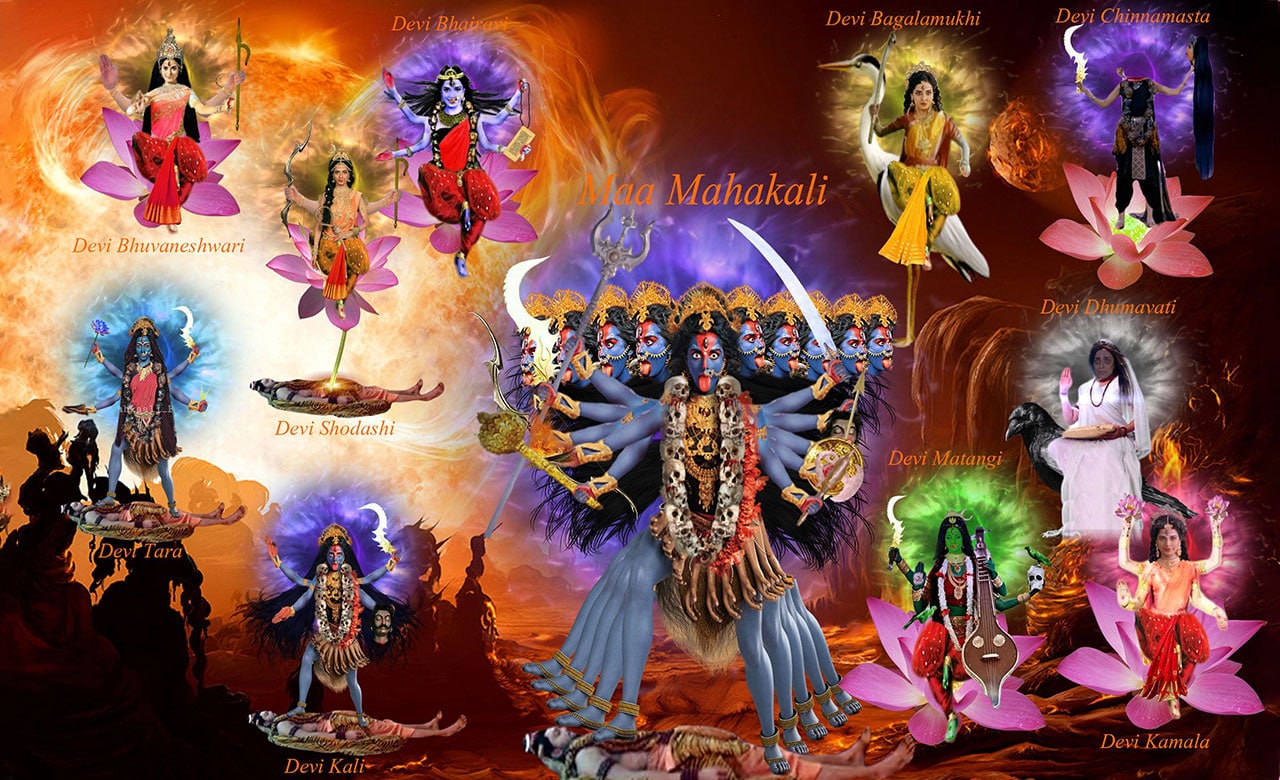
Mahavidya Signatures Behind Reactions to Insult
When Maa Kali is active within, insult triggers immediate clarity. You may cut off conversation, become blunt, or withdraw your energy sharply. This is not avoidance. Kali does not negotiate with disrespect. Her reaction is surgical. The danger comes only when her sword is used unconsciously, severing what needed patience.
When Maa Bhairavi moves, the reaction is heat. The body warms. The voice sharpens. Words arise quickly. Bhairavi protects boundaries through intensity. She teaches self-respect, but if unobserved, her fire can burn more than necessary.
When Maa Tripura Sundari governs the moment, insult hurts because harmony is disturbed. You may fall silent not from fear, but from disappointment. You replay the moment, wishing it had been more graceful. Her lesson is refinement, not suppression.
When Maa Tara is active, you absorb the insult quietly and later feel drained. You may even justify the other person’s behavior. Tara’s compassion can turn into self-erasure if not balanced with firmness.
When Maa Dhumavati presides, insult accelerates withdrawal. You lose interest in explanation. The world feels noisy and pointless. This is not weakness. Dhumavati dissolves false social hunger. Her danger lies in mistaking detachment for wisdom.
Some react with strategy rather than emotion. They observe, store information, and respond later with precision. This often reflects Maa Matangi energy — intelligence, timing, and contextual power. Silence here is not surrender; it is calculation.
During Magha Gupt Navratri, these Devi signatures surface more clearly because the mind is not distracted by outward celebration. The insult becomes the stimulus through which inner alignment reveals itself.
A Tantric Lens on Insult
Tantra teaches that insult touches ahamkara, the constructed sense of “me.” When that structure is threatened, shakti responds to protect, dissolve, or refine it. Each Mahavidya represents a different strategy of protection. None are wrong. Problems arise only when we deny our dominant mode or imitate another out of spiritual insecurity.
An insult is not merely social friction. It is a stress test for identity. The Devi shows how ready you are to drop false self-images and how attached you still are to validation.
Questions Worth Sitting With…
Instead of asking, “Why did they say that?” ask something subtler.
-Do you react immediately, or does the reaction arrive later in solitude?
-Does silence feel powerful or heavy in your body?
-Do you feel energized or exhausted after responding?
-Have similar insults triggered similar reactions throughout your life?
These questions are not for correction. They are for recognition. Repeated patterns point to the Devi shaping your current phase.
One Grounded Practice During Gupt Navratri
For the remaining days of Magha Gupt Navratri 2026, practice one simple observation.
When insult arises, delay interpretation. Do not justify or condemn your reaction. Instead, notice the first physical response — tightening, heat, heaviness, withdrawal. Later, sit quietly and name the energy, not the emotion. Fire, contraction, silence, sharpness, fatigue.
Offer that awareness mentally to the Devi you feel drawn to, or simply to consciousness itself. Tantra says recognition precedes transformation. The goal is not to react differently, but to react consciously.
From Reaction to Inner Authority
The way you react to insult is not an embarrassment. It is an initiation point. Each reaction carries the fingerprint of a Mahavidya shaping your inner authority. When you stop copying ideal responses and start understanding your own, dignity naturally follows.
HH Shri Chamunda Swamiji often reminds seekers that maturity is not the absence of reaction, but the absence of self-deception. During this Gupt Navratri, let insults become mirrors rather than wounds. The Devi is not asking you to be quieter or louder. She is asking you to be true.
And truth, once recognized, protects itself.
Have a blessed Gupt Navratri. Jai Mata Di!
Even though plenty of literature is available on spiritual practices, it is highly recommended that one learn these methods under the supervision of a Guru or an expert. Everyone has unique spirituality, personality, and experiences. One solution cannot fit all.
Therefore, seeking guidance from spiritual experts is imperative to get that unique mantra, meditation, and spiritual method crafted exclusively for you for the spiritual awakening you seek. And hence, we recommend you practice these interpretations and practices mentioned above under the guidance of an expert. Please subscribe to our mailing list to stay connected and receive spiritual information. In case of any queries, please write to us at info@chamundaswamiji.com.
You can check out our YouTube channel Chamunda Swamiji where you can learn Tantra, Mantra, Yantra, and Meditation from His Holiness Shri Chamunda Swamiji. If you seek to learn Shakti Kriya, please register with us, and we will get back to you.
Blessings from His Holiness Shri Chamunda Swami Ji.
Post a Comment
-
Subscribe to Our Blog
-
Categories
-
Popular Articles
- Orange butterfly: Spiritual Significance
- The Dasa Mahavidyas
- Maa Bhuvaneshwari | The Dasa Mahavidyas
- The Ghosts of Ganagapur Temple, Karnataka
- Vivah Bandhan Curse – What Is It and How to Spiritually Heal It.
- Tripura Sundari | The Dasa Mahavidya
- What are Beej Mantras?
- Decoding the Maha Mrityunjay Mantra: Origin, Meaning, and Benefits
- The Five Shades of Tantra
- 9 Most Powerful Tantric Temples in India