

- Email info@ChamundaSwamiJi.com
- Call +1-516-933-7590
-
 Email
info@ChamundaSwamiJi.com
Email
info@ChamundaSwamiJi.com
-
 Call
+1-516-933-7590
Call
+1-516-933-7590


Book an Appointment
Informative
Why Gupt Navratri Is Considered Best for Tantra & Mahavidya Sadhana
Many people ask the same thing every year.
Why do tantric practitioners wait for Gupt Navratri more than the public Navratris?
What changes in these nine days that does not happen otherwise?
Is it only tradition, or something experiential?
Meeting the Experience Without Hype
During Magha Gupt Navratri 2026, this curiosity has become even stronger. Seekers feel an unusual inner pull toward mantra, silence, and solitary rituals. Even those who usually struggle to sit still suddenly sense a door slightly open. The question is not about calendars anymore. It is about atmosphere.
The internet has turned Gupt Navratri into a marketplace of dramatic promises. Some call it a shortcut to powers. Others reduce it to superstition. Between these extremes, the genuine meaning often gets lost.
In lived spirituality, Gupt Navratri is neither magic season nor blind belief. It is a particular inner climate recognized by practitioners over centuries. Just as farmers know the soil becomes different before rain, tantrikas observed that consciousness behaves differently during these days.
Moving Beyond Popular Explanations
Most explanations remain shallow. People say Gupt Navratri is powerful simply because scriptures praise it. Others believe it works only due to collective faith. Both views miss the experiential mechanics.
Tantra looks at time as a living field, not a neutral container. Certain periods soften the boundary between surface mind and deeper layers. Gupt Navratri is considered one such fold in time where the Mahavidya currents flow closer to ordinary awareness. This idea unsettles the rational approach because it suggests that effort alone is not the whole story; timing also participates.
The Subtle Science Behind Gupt Navratri
The word gupt means hidden. These Navratris were traditionally observed not with loud festivals but with inward practices. Ancient teachers noticed that during this period the senses naturally turn subtle. Dreams become vivid, memories surface, and intuition sharpens without extra techniques.
Tantra explains this through the movement of prana. The collective rhythm of nature during late winter and monsoon shifts the dominance from outward activity to inward absorption. When prana moves inward, mantra finds less resistance. What usually takes months of effort can occur in days because the river is already flowing in that direction.
For Mahavidya sadhana, this matters deeply. The Mahavidyas are intense currents of transformation. Outside Gupt Navratri, approaching them often requires long preparation. During this window, the same energies feel approachable, like fierce teachers who have temporarily softened their voice.
Why Esoteric Practices Prefer This Time?
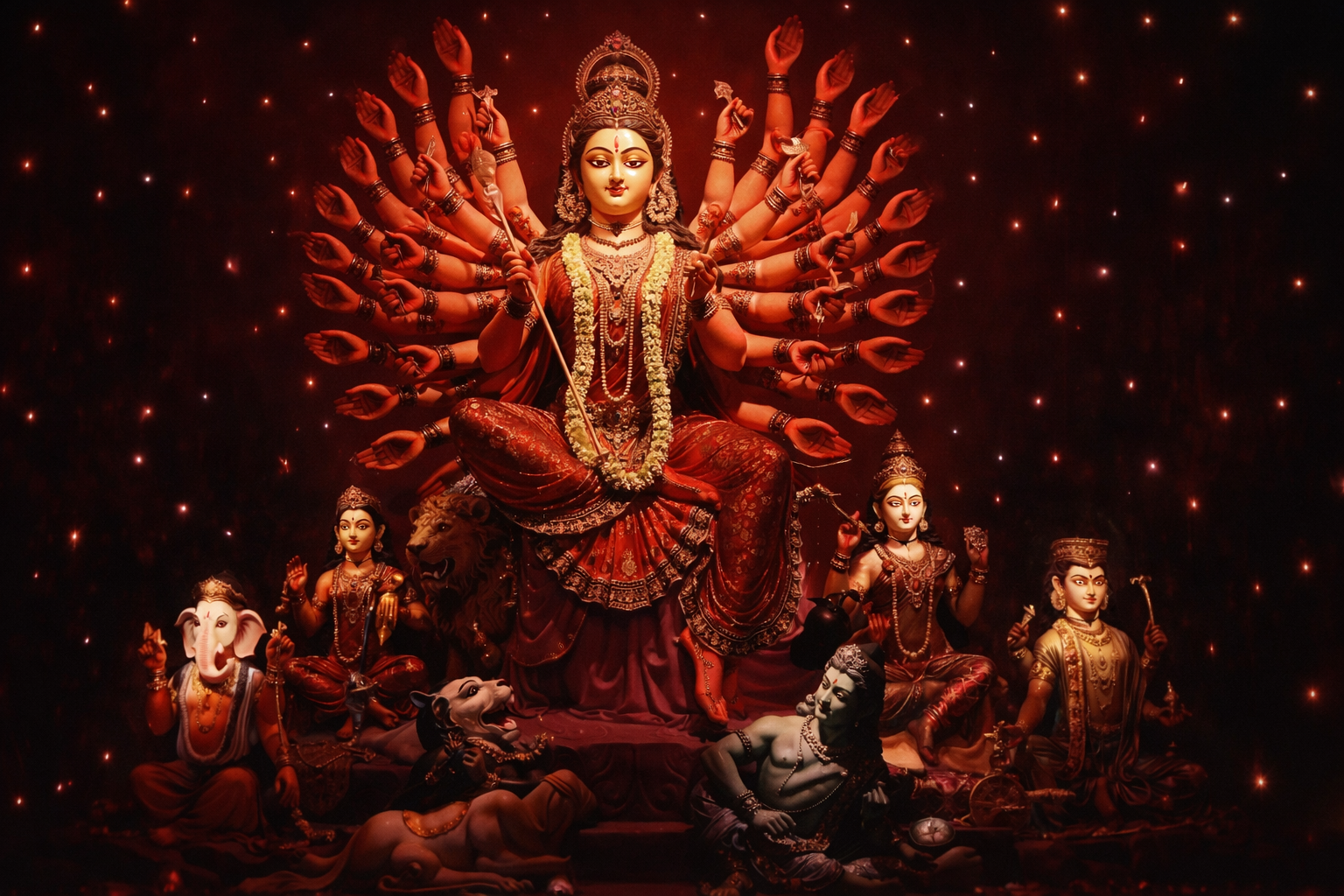
Public Navratri celebrates the Devi as protector of society. Gupt Navratri approaches her as transformer of the inner world. Tantric work deals with shadows, unresolved emotions, ancestral knots, and subtle identities. Such work needs privacy and natural introversion.
Practitioners observed that during Gupt Navratri distractions reduce on their own. Desire for excessive speech decreases. The body asks for simpler food and longer silence. These are not imposed disciplines; they arise spontaneously, creating ideal conditions for mantra and yantra work.
The Mahavidya Connection
Each Mahavidya addresses a different layer of ego. Kali cuts false identity, Tara heals emotional hunger, Tripura Sundari refines perception, Bhairavi builds sacred boundaries, Dhumavati empties arrogance, and the others sculpt power in their own ways.
Outside this period, meeting these forces can feel overwhelming. In Gupt Navratri their entry is gradual, almost maternal. Seekers often report that fears surrounding fierce forms lessen, and understanding becomes experiential rather than conceptual.
A Tantric View of Time
Tantra never treated time as uniform. Just as the ocean has tides, consciousness has tides too. Gupt Navratri is seen as high tide for inner work. The same mantra chanted in ordinary days may touch only the surface mind, while in this period it slips deeper like a boat helped by current.
This does not mean miracles are guaranteed. It means resistance is lower. The door is ajar, not fully open, yet enough for sincere effort to enter.
Clearing a Common Misunderstanding
Many believe Gupt Navratri is meant only for advanced tantrikas. Tradition actually says the opposite. Because the environment is supportive, beginners can safely taste disciplines that would otherwise be difficult.
The secrecy was not about exclusion but protection from misuse. When powerful methods meet unprepared ego, distortion occurs. Hence the emphasis on guidance, simplicity, and humility during these days.
The Inner Signs People Notice
During Magha Gupt Navratri 2026, several subtle signs appear across seekers. Sleep becomes lighter. Old emotions revisit without obvious triggers. Attraction toward one particular Devi or mantra intensifies. Food preferences simplify.
These are not mystical certificates but practical indicators that the nervous system is cooperating. Tantra reads these signs the way a physician reads pulse.
PERSONAL MIRROR Checking Your Readiness
Before rushing into elaborate rituals, ask yourself quietly.
-Are you seeking transformation or escape from problems?
-Can you maintain basic discipline without announcing it to the world?
-Do you respect the Devi or only desire quick results?
-Are you willing to change behavior along with chanting?
Honest answers decide whether Gupt Navratri becomes doorway or distraction.
The Role of Silence and Secrecy
Esoteric practice depends on containment. Speaking too much about experiences leaks energy into validation. Gupt Navratri encourages minimal social display so that the inner process matures undisturbed.
Secrecy here is not superstition. It is psychological hygiene. Just as a seed grows better under soil than on display, sadhana ripens better in privacy.
One Grounded Approach for This Gupt Navratri
Instead of complex systems, adopt one steady rhythm for the remaining days of 2026 observance.
Choose a single mantra or simple japa related to your ishta. Sit at the same time daily, even if only for ten minutes. Keep food light and speech measured. After chanting, remain silent for two minutes without analyzing sensations.
Avoid mixing many techniques. Tantra values depth over variety. Let the period do the work rather than your ambition.
If possible, spend a little time near natural water or earth, as elements stabilize subtle shifts. This small discipline aligns you with the season’s inward current.
Walking with Guidance
Tradition always paired Gupt Navratri with the presence of a teacher. The guru’s role is not to control experiences but to keep them grounded. Without such anchoring, imagination can mimic realization.
HH Shri Chamunda Swamiji reminds seekers that the Devi tests sincerity more than knowledge. Simple consistency pleases her more than complicated rituals copied from the internet.
HH Shri Chamunda Swamiji’s Uptake
HH Shri Chamunda Swamiji often says that Gupt Navratri is not a season of achievement, but a season of alignment. The Devi is not counting how many malas you finish; she is watching how honestly you meet yourself. If these days make you a little quieter, a little kinder, and a little more aware of your inner noise, the sadhana has already succeeded.
Swamiji reminds seekers that Tantra is not about collecting experiences. It is about dissolving the false doer. When practice becomes a tool for ego, the Devi hides. When practice becomes listening, she reveals herself naturally. Gupt Navratri teaches this listening more than any other time.
His simple instruction is to walk gently. Do not chase visions, do not fear emotions that surface, and do not compare your path with another’s. Sit before the Mother with ordinary sincerity, finish your worldly duties with responsibility, and let the inner work happen at its own pace.
According to Swamiji, the real blessing of these nine days is not power but maturity. The Mahavidyas do not come to make life dramatic; they come to make life truthful. If you emerge from Gupt Navratri with clearer conduct and softer awareness, you have received everything the Devi intended.
Even though plenty of literature is available on spiritual practices, it is highly recommended that one learn these methods under the supervision of a Guru or an expert. Everyone has unique spirituality, personality, and experiences. One solution cannot fit all.
Therefore, seeking guidance from spiritual experts is imperative to get that unique mantra, meditation, and spiritual method crafted exclusively for you for the spiritual awakening you seek. And hence, we recommend you practice these interpretations and practices mentioned above under the guidance of an expert. Please subscribe to our mailing list to stay connected and receive spiritual information. In case of any queries, please write to us at info@chamundaswamiji.com.
You can check out our YouTube channel Chamunda Swamiji where you can learn Tantra, Mantra, Yantra, and Meditation from His Holiness Shri Chamunda Swamiji. If you seek to learn Shakti Kriya, please register with us, and we will get back to you.
Blessings from His Holiness Shri Chamunda Swami Ji.
Post a Comment
-
Subscribe to Our Blog
-
Categories
-
Popular Articles
- Orange butterfly: Spiritual Significance
- The Dasa Mahavidyas
- Maa Bhuvaneshwari | The Dasa Mahavidyas
- The Ghosts of Ganagapur Temple, Karnataka
- Vivah Bandhan Curse – What Is It and How to Spiritually Heal It.
- Tripura Sundari | The Dasa Mahavidya
- What are Beej Mantras?
- Decoding the Maha Mrityunjay Mantra: Origin, Meaning, and Benefits
- The Five Shades of Tantra
- 9 Most Powerful Tantric Temples in India