

- Email info@ChamundaSwamiJi.com
- Call +1-516-933-7590
-
 Email
info@ChamundaSwamiJi.com
Email
info@ChamundaSwamiJi.com
-
 Call
+1-516-933-7590
Call
+1-516-933-7590


Book an Appointment
Informative
Navratri Fasting Rules: What to Eat and What to Avoid During Chaitra Navratri
You wake up early. You decide to observe Navratri properly this time. You avoid regular food, switch to vrat meals, and try to stay disciplined. But by the third or fourth day, the body feels heavy. The mind becomes irritated. The devotion you started with begins to feel mechanical.
You begin to wonder if you are doing something wrong.
This confusion is more common than people admit. Many devotees follow Navratri fasting rules outwardly, but internally feel disconnected or exhausted. The problem is not the fast itself. It is the way the fast is understood and practiced.
You are not doing it wrong, but you may not be doing it completely
First, understand this clearly. If you feel tired, distracted, or restless during Navratri fasting, it does not mean your devotion is weak. It usually means your approach is incomplete.
Most people focus only on Navratri fasting food. They think fasting is just about replacing normal meals with specific vrat items. But traditional fasting during Chaitra Navratri was never designed as a food restriction alone. It was meant to be a combined discipline of body, mind, and awareness.
So if your body is following the fast but your mind is still reactive, distracted, or indulgent, the experience starts feeling unbalanced. This is why many people feel drained instead of elevated.
What if fasting is not about food at all
Modern understanding has reduced fasting to a diet plan. Eat this. Avoid that. Follow these recipes. But if you look deeper, the real purpose behind Navratri fasting rules is not food control. It is energy regulation.
During Navratri, the body naturally goes through a seasonal transition. Digestion patterns change. Energy shifts. The sages designed fasting to support this transition. Light, sattvic food helps reduce internal load so that awareness can increase.
If fasting becomes heavy eating of fried vrat items, sugar-loaded dishes, and constant snacking, the body becomes more burdened than before. This is why many people feel more tired during fasting than on normal days.
So the real question is not “what are you eating” but “what is your fasting doing to your energy.”
The deeper purpose of Navratri fasting
From a yogic and tantric perspective, fasting during Navratri is meant to reduce tamas and stabilize prana. When digestion becomes lighter, the mind naturally becomes more stable. This allows mantra, prayer, and meditation to go deeper.
The reason Navratri vrat food is simple and restricted is to avoid overstimulation of the senses. Salt is reduced. Grains are avoided. Food becomes lighter. This creates space for awareness to turn inward.
In this sense, fasting is not deprivation. It is preparation.
Preparation for clarity. Preparation for discipline. Preparation for inner connection with Shakti.
When understood this way, the Navratri fasting rules begin to feel purposeful rather than restrictive.
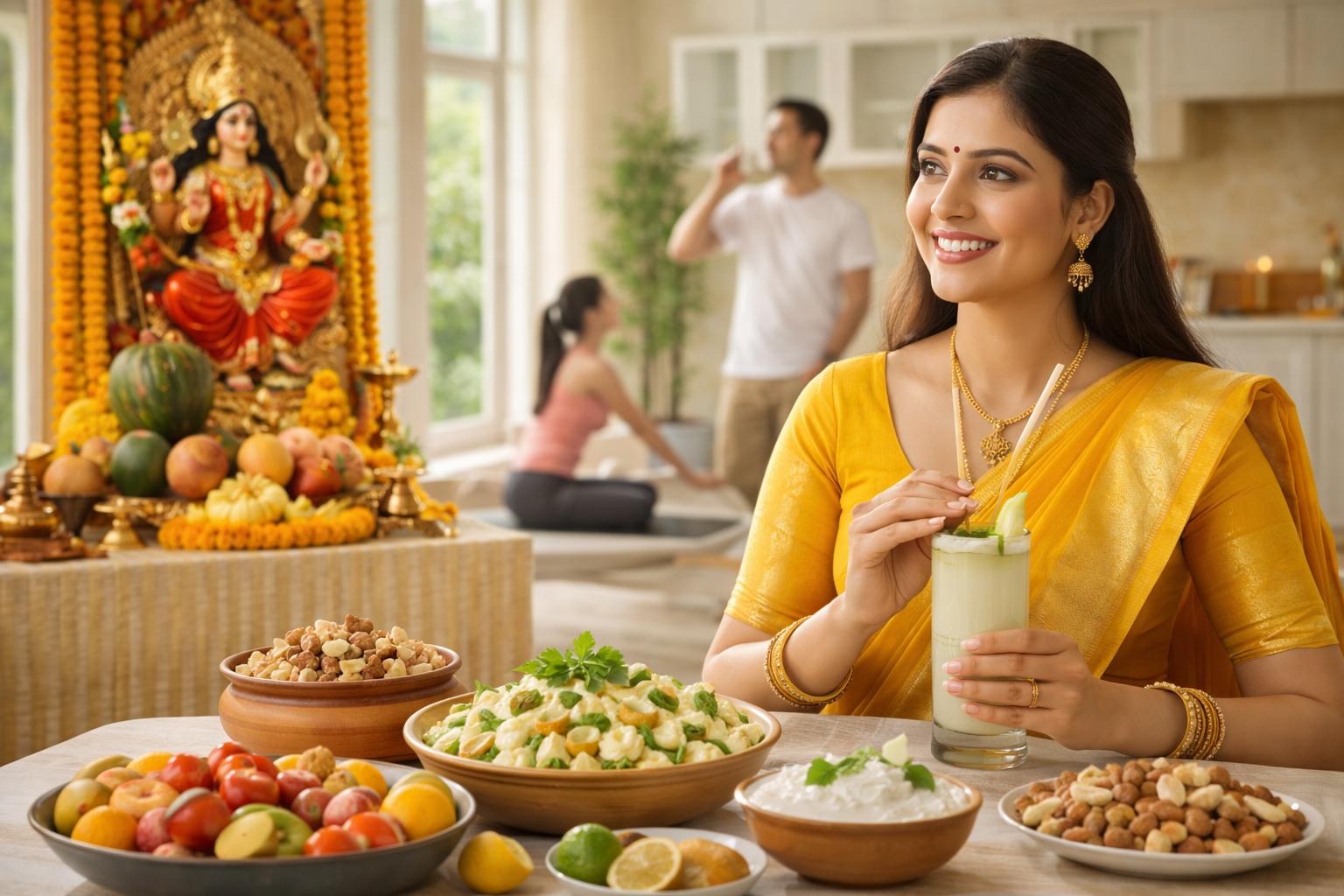
What to eat during Navratri fasting
Choosing the right Navratri fasting food is important because it directly affects both physical energy and mental clarity. The focus should always be on simplicity and digestibility.
Common foods allowed during Navratri include fruits, milk, yogurt, nuts, and light preparations made from buckwheat (kuttu), water chestnut flour (singhara), and amaranth (rajgira). Rock salt is used instead of regular salt.
Simple meals like fruit bowls, boiled potatoes with minimal spices, sabudana khichdi, and light kheer are commonly consumed. These foods are easy to digest and help maintain energy without overloading the system.
The idea is not to eat less forcefully but to eat lighter and cleaner. When the body feels light, the mind naturally becomes more receptive.
What to avoid during Navratri fasting
Understanding what to avoid is equally important in following Navratri fasting rules correctly.
Regular grains like wheat and rice are typically avoided. Onion, garlic, and heavily spiced food are also restricted because they are believed to increase restlessness in the mind.
Overeating fried vrat items is one of the biggest mistakes people make. Foods like deep-fried sabudana snacks or excessive sweets may be allowed technically, but they disturb digestion and reduce the effectiveness of the fast.
Another common issue is constant snacking. Fasting does not mean eating all day in smaller portions. It means creating gaps and discipline in consumption so that the body can reset.
Navratri bhog for each day
Along with personal fasting, offering food to the Goddess is an important part of Navratri. The tradition of Navratri bhog for each day reflects devotion and gratitude.
Different forms of Maa Durga are worshipped each day, and specific offerings are made accordingly. These bhog items are usually simple, sattvic, and prepared with purity.
Ghee, sugar, milk-based sweets, fruits, honey, jaggery, coconut, and sesame are commonly offered across the nine days. While the exact bhog may vary by tradition, the intention remains the same. The offering represents surrender and respect toward divine energy.
After offering bhog, it is consumed as prasad, reinforcing the connection between nourishment and devotion.
Navratri Bhog:
Navratri aligns with seasonal transition, so the bhog focuses more on light, cooling, and cleansing foods that support the body.
Day 1 – Maa Shailputri
Offer pure ghee. It is believed to strengthen health and bring stability.
Day 2 – Maa Brahmacharini
Offer sugar or mishri. It supports simplicity and calmness of mind.
Day 3 – Maa Chandraghanta
Offer milk or kheer. It promotes peace and removes inner agitation.
Day 4 – Maa Kushmanda
Offer malpua or sweet preparations. It enhances vitality and energy.
Day 5 – Maa Skandamata
Offer bananas. It represents nourishment and growth.
Day 6 – Maa Katyayani
Offer honey. It brings sweetness in speech and relationships.
Day 7 – Maa Kalaratri
Offer jaggery. It is believed to remove negativity and fear.
Day 8 – Maa Mahagauri
Offer coconut. It symbolizes purity and mental clarity.
Day 9 – Maa Siddhidatri
Offer sesame or halwa. It is associated with blessings and fulfillment.
Navratri vrat katha: what and how to read
Many devotees also include the reading of Navratri vrat katha as part of their fasting routine. This practice helps keep the mind aligned with the spiritual purpose of Navratri.
The vrat katha usually contains stories of Maa Durga, her victories over negative forces, and the importance of devotion and discipline. Reading or listening to these stories daily strengthens faith and focus.
To follow Navratri vrat katha what and how to read, choose a fixed time each day, preferably after the puja. Sit in a calm space, read slowly, and reflect on the meaning rather than rushing through the text.
The purpose is not completion of reading. It is internalization of the message.
One simple practice to stabilize your fast
If your fasting feels inconsistent or mentally exhausting, follow one simple practice. After your daily puja, sit quietly for ten to fifteen minutes and observe your breath. Do not try to control anything. Just watch.
This small practice helps stabilize your energy and brings awareness back to the present moment. It also reduces the mental agitation that often arises during fasting.
Combined with proper Navratri fasting food and mindful discipline, this practice makes the entire experience more balanced.
Fasting is not about control, it is about clarity
The real purpose of Navratri fasting rules is not restriction but refinement. When done with awareness, fasting reduces inner noise and increases clarity. It prepares the body and mind to receive the deeper energy of Navratri.
If you approach the fast with only external discipline, it may feel tiring. But when you combine food awareness, mantra, and reflection, the same fast becomes a powerful inner process.
Guidance from traditions and teachers like HH Shri Chamunda Swamiji often emphasizes this balance. True fasting is not about what you remove from your plate. It is about what you allow to settle within you.
As you observe Chaitra Navratri, let your fasting become lighter, more aware, and more intentional. That is where the real transformation begins.
Even though plenty of literature is available on spiritual practices, it is highly recommended that one learn these methods under the supervision of a Guru or an expert. Everyone has unique spirituality, personality, and experiences. One solution cannot fit all.
Therefore, seeking guidance from spiritual experts is imperative to get that unique mantra, meditation, and spiritual method crafted exclusively for you for the spiritual awakening you seek. And hence, we recommend you practice these interpretations and practices mentioned above under the guidance of an expert. Please subscribe to our mailing list to stay connected and receive spiritual information. In case of any queries, please write to us at info@chamundaswamiji.com.
You can check out our YouTube channel Chamunda Swamiji where you can learn Tantra, Mantra, Yantra, and Meditation from His Holiness Shri Chamunda Swamiji. If you seek to learn Shakti Kriya, please register with us, and we will get back to you.
Blessings from His Holiness Shri Chamunda Swami Ji.
Post a Comment
-
Subscribe to Our Blog
-
Categories
-
Popular Articles
- Orange butterfly: Spiritual Significance
- The Dasa Mahavidyas
- Maa Bhuvaneshwari | The Dasa Mahavidyas
- The Ghosts of Ganagapur Temple, Karnataka
- Vivah Bandhan Curse – What Is It and How to Spiritually Heal It.
- Tripura Sundari | The Dasa Mahavidya
- What are Beej Mantras?
- Decoding the Maha Mrityunjay Mantra: Origin, Meaning, and Benefits
- The Five Shades of Tantra
- 9 Most Powerful Tantric Temples in India