

- Email info@ChamundaSwamiJi.com
- Call +1-516-933-7590
-
 Email
info@ChamundaSwamiJi.com
Email
info@ChamundaSwamiJi.com
-
 Call
+1-516-933-7590
Call
+1-516-933-7590


Book an Appointment
Informative
Don’t know who your Kula Devata is?
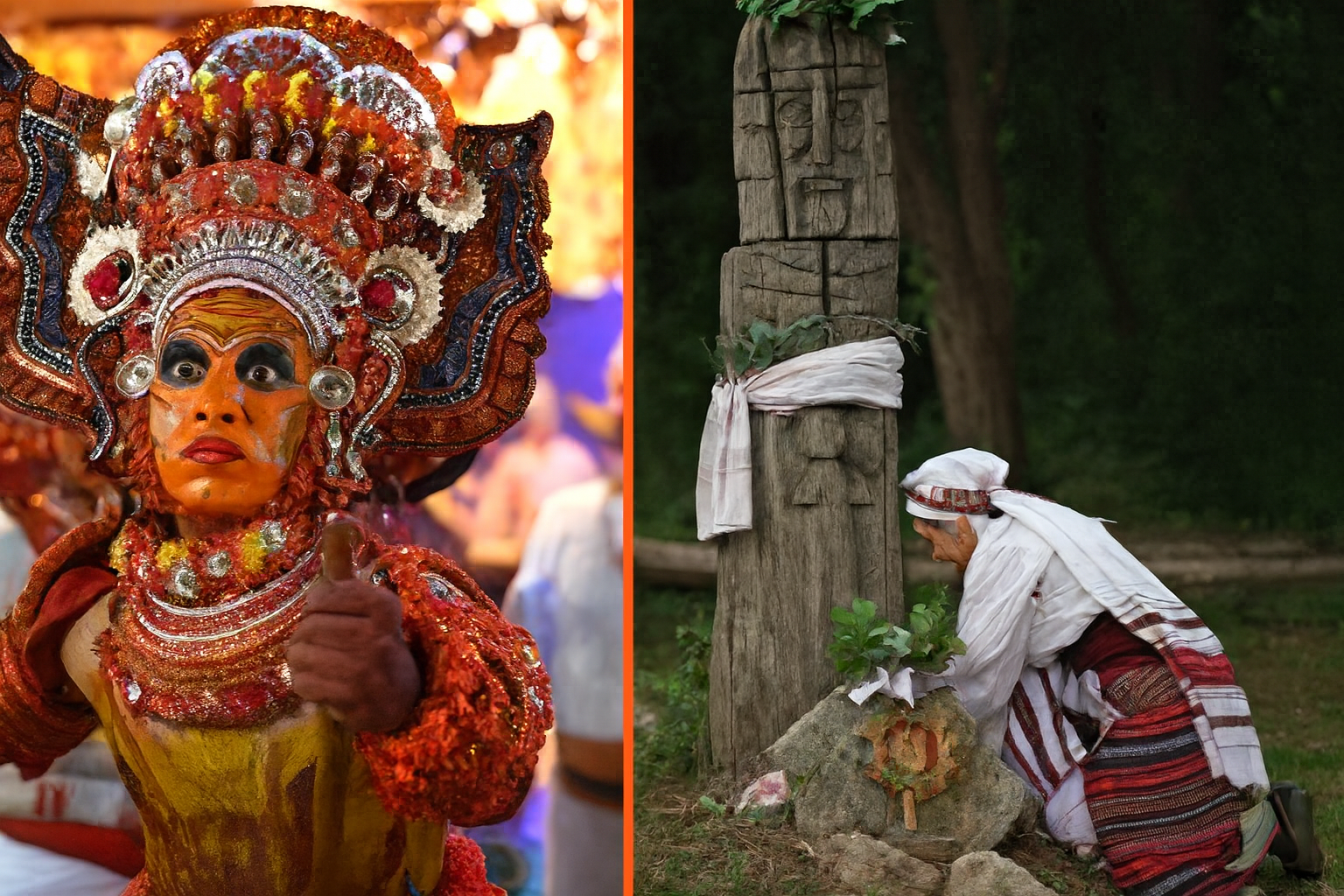
Every family is born from a story much older than its members; a story held together by an unseen deity who has protected the lineage for centuries. In Indian spiritual traditions, this sacred guardian is called your Kula Devata. This is the deity that once received your ancestors’ prayers, watched their journeys, shaped their values, and blessed their destiny.
But in the modern age, as families moved, fragmented, or adopted newer customs, many people unknowingly stopped worshipping their Kula Devata. And slowly, the ancient bond began to fade.
What happens when this connection breaks?
Life starts whispering clues.
Many people face repeated obstacles that make no logical sense. Some experience constant emotional heaviness, disturbances at home, strained relationships, or unexplainable financial stagnation. Others feel spiritually “lost,” disconnected from their inner grounding, or unable to find the clarity and stability they seek. And often, they don’t realize that these troubles are not random.
These are subtle signs of a divine relationship that has been left unattended. The energy of the Kula Devata is much like the Muladhara Chakra, the root of your spiritual system. When this root is forgotten, the entire structure becomes shaky.
Re-establishing this connection is not dogma. It is healing.
It is returning to the soil your ancestors walked on, the prayers they whispered, and the deity who held their hand through both storms and celebrations.
This blog will guide you gently through the pathways to rediscover that divine presence.
Understanding the Kula Devata: Your Lineage’s Spiritual Root
A Kula Devata is not simply a “family deity.” It is the energetic guardian chosen by your ancestors a deity whose frequency matched the collective karma, temperament, and spiritual aspirations of the lineage. Think of it as the deity whose vibration harmonized with your family’s DNA across generations.
In ancient India, families were deeply connected with nature, land, and cosmic forces. Villages were built around temples, rituals followed the cycles of the moon, and every gotra carried its own spiritual rhythm. In this holistic ecosystem, each lineage aligned with a deity who resonated with its spiritual blueprint.
For some families, it was the fierce protective energy of a Devi Maa. For others, it was the grounding stability of Khandoba, the wisdom of Datta, the grace of Shiva, or the nurturing presence of a Grama Devata.
Worshipping the Kula Devata keeps the lineage aligned, grounded, and protected. When the connection is alive, blessings flow like a river that has never forgotten its source. When the connection fades, life begins to feel like a river cut off from its origin.
Finding your Kula Devata is therefore not only a ritual it is remembering your divine identity. This is how you find them:
1. Ask the Elders, The First Doorway to Sacred Memory
In every family, someone still carries the old stories. Maybe a grandmother remembers a temple visited every year. Maybe an uncle remembers hearing a deity’s name during a wedding ritual.
Maybe a distant relative remembers a mantra that elders would chant.
Ask them:
“Which temple did our ancestors visit?”
“Was there a specific deity our family prayed to before major events?”
“Which name was printed on old wedding or munja invitations?”
Often the information comes not as a complete answer but as fragments. A symbol, a temple name, a village reference, a memory from childhood. When these fragments are put together, they form a powerful map back to your lineage deity.
Elders are living libraries. And sometimes, just one sentence from them becomes the key to reopening the doorway to your Kula Devata.
2. Look Into Old Rituals and Sacred Invitations
Our ancestors loved hiding divine clues in day-to-day customs.
Old Wedding or Naming Ceremony) Invitations
Before digital formats, invitations were hand-prepared and carried deep religious symbolism. Beside Shri Ganapati, many families printed the name or symbol of their Kula Devata. Examples include:
“Shri Malhari Mhalsakant Prasanna” (symbol of Khandoba)
A specific Devi’s Avatara
Yantras or motifs linked to the deity
A mount like lion, bull, or peacock
These symbols are not decoration but they are identity markers, like a spiritual signature of the lineage.
Check Rituals in the Household: Which deity receives special Naivedya on festivals?
Which God or Goddess is invoked before important family events?
Which festivals feel “extra special” in your household?
These patterns often point directly to your Kula Devata. Rituals preserve memory even when words fade.
3. Trace Your Roots Through the Ancestral Village (Mool Grama)
Every lineage originates from a geographical heart, the ancestral village. And in most cases, the Kula Devata’s primary temple is located in or near that region.
If you can identify your Mool Grama:
Visit the local temples
Speak to village elders
Ask people from your surname community
Understand which deities are traditionally worshipped in that area
Sometimes the Kula Devata is the region’s Grama Devata, a fierce protector of the land. Other times, it is a form of Shiva, Bhairavnath, Maruti, Khandoba, or a local Devi whose energy resonates with the soil of your ancestors.
Remember: Your divine roots are geographical too. The land remembers your footsteps even if you don’t.
4. Consult a Knowledge-Keeper or Astrologer
Astrologers and traditional knowledge-keepers can often identify the Kula Devata using Gotra and kula history, Surname lineage, Birth chart dynamics, Specific Family rituals, Regional traditions etc.
They don’t guess. They decode the symbology hidden in ancestry.
Sometimes the Kula Devata energy reveals itself through dreams, repeated encounters with a deity’s name, or a sudden emotional pull toward a temple or image.
Pay attention, as the intuition is a language of lineage.
5. Examine Your Home Altar, Especially the Ancient ‘Tak’
In many South Indian homes, a small metal icon called the Tak is placed in the devhara and passed through generations. These tiny deities often represent the Kula Devata.
Look closely:
A lion or tiger might indicate a Devi lineage
A warrior deity riding a horse may represent Khandoba
A trident, damaru, or fierce posture may point to Bhairav or Shiva
Unique regional symbols may represent local goddesses
These ancestral artifacts act like spiritual fingerprints, revealing the deity who has silently protected your lineage.
What If You Still Can’t Find Your Kula Devata?
Sometimes, despite every effort, the answer remains hidden. This is not a failure but it simply means the connection needs to be rebuilt gently. Sanatan Dharma offers beautiful alternatives to continue receiving the blessings of your lineage until the true name reveals itself.
1. Chant in Honor of the Unknown Kula Devata
Even without the name, your intention reaches the source.
Chant:
“Shri Kuldevatabhyo Namah”
or
“Kula Devatāyai Namah”
This is like saying:
“I don’t know your form, but I seek your presence and protection.”
Every mantra you chant becomes a call your ancestors can hear.
2. Worship Shri Dattatreya, The Guru of All Lineages
Shri Datta is considered the spiritual mentor of all Kula Devatas. His worship strengthens the bond with your familial deity. Chanting “Shri Gurudev Datta”, lighting a lamp, or offering a simple prayer helps clear ancestral blockages and invites divine protection.
3. Honor Your Ancestors (Pitru Puja)
Your Pitrus are the carriers of your lineage’s blessings. Remembering them, even with a simple prayer activates the grace of the Kula Devata.
Offer gratitude on special occasions like Amavasya, Family festivals, Birth anniversaries, Ritual days etc. A prayer to the ancestors is a prayer carried straight to the Kula Devata.
4. Worship the Grama Devata or Local Deity Where You Live
Wherever you live now, that land has a guardian energy. Worshipping the local deity like Maruti, Bhairavnath, or the village Devi brings stability and protection. It also harmonizes your energy with the land, making life feel smoother and more aligned.
5. Or Choose One Deity with Complete Faith
If you still cannot trace your Kula Devata, choose one deity you naturally feel drawn to:
Shri Ganapati
Lord Shiva
Lord Vishnu
The DIvine Mother
Pure devotion is powerful. When the heart is sincere, it always reaches the right divine force.
Why This Search Matters?
Reconnecting with your Kula Devata awakens Pitrushakti, the ancestral strength flowing silently in your bloodline. This energy brings a sense of inner stability, emotional resilience, and a feeling that unseen hands are supporting you through your challenges.
It also revitalizes your spiritual DNA, the subtle energetic coding inherited from generations of devotion. When this memory activates, clarity, intuition, and inner confidence rise naturally, as though something inside you has finally aligned.
Finding your Kula Devata helps restore your cultural and emotional grounding. In a world that constantly uproots us, this connection brings the comfort of returning to your original soil, the stories, rituals, and divine forces that shaped your ancestors.
It also allows you to tune into your family’s unique divine frequency. Every lineage carries a particular spiritual rhythm: fierce, nurturing, protective, wise, or transformative. When you rediscover this frequency, life begins to move with greater flow and inner harmony.
And above all, it restores a sense of belonging beyond time. You realize you are not alone but you are part of a vast river of souls, values, prayers, and blessings that began centuries before you. This awareness nourishes the heart and anchors the spirit with grace.
Remember: Finding your Kula Devata is not about obligation. It is about reconnection. It is about remembering that your journey is supported not only by divine forces, but by centuries of ancestors who prayed, hoped, and dreamed for the wellbeing of their future generations including you.
When you rediscover this bond, something shifts inside you.
You feel grounded.
You feel guided.
You feel held.
Your Kula Devata has been waiting.
Now is the time to return.
Even though plenty of literature is available on spiritual practices, it is highly recommended that one learn these methods under the supervision of a Guru or an expert. Everyone has unique spirituality, personality, and experiences. One solution cannot fit all.
Therefore, seeking guidance from spiritual experts is imperative to get that unique mantra, meditation, and spiritual method crafted exclusively for you for the spiritual awakening you seek. And hence, we recommend you practice these interpretations and practices mentioned above under the guidance of an expert. Please subscribe to our mailing list to stay connected and receive spiritual information. In case of any queries, please write to us at info@chamundaswamiji.com.
You can check out our YouTube channel Chamunda Swamiji where you can learn Tantra, Mantra, Yantra, and Meditation from His Holiness Shri Chamunda Swamiji. If you seek to learn Shakti Kriya, please register with us, and we will get back to you.
Post a Comment
-
Subscribe to Our Blog
-
Categories
-
Popular Articles
- Orange butterfly: Spiritual Significance
- The Dasa Mahavidyas
- Maa Bhuvaneshwari | The Dasa Mahavidyas
- The Ghosts of Ganagapur Temple, Karnataka
- Vivah Bandhan Curse – What Is It and How to Spiritually Heal It.
- Tripura Sundari | The Dasa Mahavidya
- What are Beej Mantras?
- Decoding the Maha Mrityunjay Mantra: Origin, Meaning, and Benefits
- The Five Shades of Tantra
- 9 Most Powerful Tantric Temples in India